I guess I never really thought about how precarious the existence of any living thing is, never truly realized with what a fragile grip we hold on to our residence in this realm. Without ever really knowing it, I considered myself and my family invincible beings. I assumed Mom and Dad and I would always be there for one another, forever. That is, until one summer day, when I saw something that shook me beyond words. It was a comparatively small event in the life of a man, but none the less profound in its repercussions, as are life’s most pertinent moments.
My father had a modest lawn mower repair business he ran out of the garage behind our suburban ranch house, for which we were always receiving catalogs and parts and samples. The volume was much more than our mailbox could accommodate, so he got a sizable box at the post office.
Because I hadn’t taken to sticking my head under lawn tractors, or having greasy fingers and bruised knuckles, my involvement in the “family” business was to collect the mail from the box every day. The post office was just up the street a few blocks, the walk usually pleasant, and provided me with some sense of involvement, except when it was raining, or snowing, or hot; then the task became burdensome, much more a chore than an effort of teamwork. Actually, I didn’t mind the heat or cold, or even snow, but the rain was something altogether different. There’s nothing worse than being soaked to the skin with cold rain and trying to walk in clothes that are practically glued to your flesh. It was a large price for small kid to pay, but Dad said responsibility is what made a man a man, and there was no arguing, and least not with Dad.
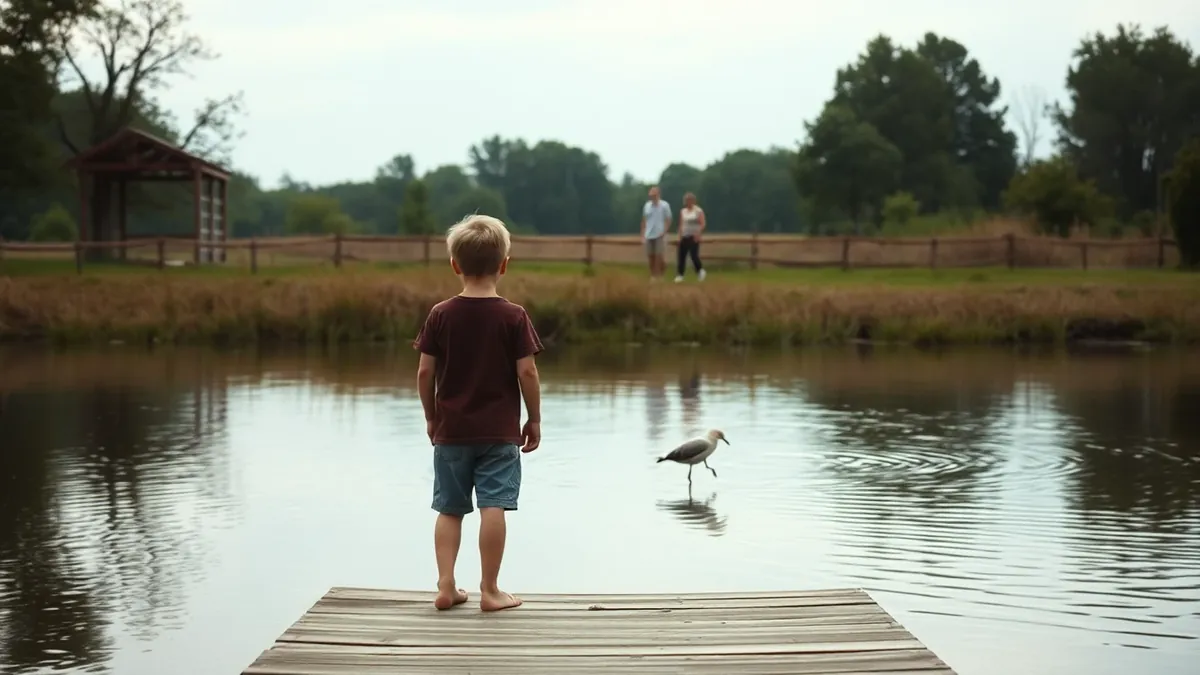
I was about fourteen or so, I think. I wasn’t driving yet. It was a hot summer day, a few hours past noon, and I was making my daily trek over to the P.O. I was in rather a cheerful mood because I had been swimming for most of the morning in the pond back of our neighbor’s house. I remember the heat, very distinctly. It was one of those days where it was so hot you could see the haze simmering above the blacktop, and feel the weight of the air every time you took a breath. I ducked into the shade every chance I could, to avoid the merciless sun’s bake, but the utility company had just come along and done their summer pruning a few days before, so the pockets of relief were much diminished.
As I weaved through the heat, noting the dramatic restructuring of limb and foliage, which left the trees more subdued than barren, I almost felt sorry for the pollarded trees, stripped of their majestic free-form growth. The once tall and wide and boundless maples and sycamores seemed helpless, wilting, a reflection of my own situation. Choice had been made and executed on their behalf, as was mine.
I had planned to get the mail and jump right back in the water with Billy and Katie Bastow. On such a hot day I would attempt to shorten the journey by cutting the corner, slipping under a rickety post and rail fence that seemed fortified by the wisps of ivy that clung to its lengths, and make a beeline through Mrs. Black’s yard, which lead to the alley alongside the post office. But old Mr. Black had sworn off all the neighborhood kids with his sweeping cane once his locally recognized, prize-winning vegetable garden got growing. Even if not caught in the act, but merely spotted in the attempt, the infraction would surely cause the grizzled gardener to call Dad and tarnish an otherwise perfect summer day, so I took the long way around the block. It was then that I came across the scene that would unnerve me more than the image of a cane-wielding Mr. Black. Just beside a wide clump of crabgrass growing between the cracks in the weathered pavement, lay a baby bird. And when I say ‘baby,’ I mean just that. The creature was quite young and couldn’t have been more than a day old. It was sprawled face-up on the bleached concrete, it’s limbs spreading, convulsing in a haunting spasm. It must have fallen from a nest in the cropped sycamore overhead, forced to confront a strange merciless world on the most unfairest of terms. It made pathetic sight, halting me in my tracks.
The fallen creature was a tiny, pinkish-red mass, having barely any distinguishing features; it had no feathers, or discernible wingspan, it’s head was minute, almost concave, it’s deep-set eyes tightly closed, as if clenched in defiance of death. The baby had never probably known the light of day, except for its cruelness. The fallen figure hardly looked like a bird, even when I squatted for a closer examination. I wouldn’t have known what the little thing was, if it wasn’t for the beak, the tiny blanched, yellow beak that flickered and opened and closed amid the squirming and throwing of roseate head from side to side. The baby’s mouth stretched wide and long, as if to alert the world to its fate, but was strangely silent. Not one hint of a sound came from that gaping beak, and the absence of vocalization held me, for the twisting figure was like a bizarre pantomime, morbidly captivating. There were no visible traces of blood. I could not tell what, if any, wounds the tiny being had suffered in the fall, but it must have been in pain; the jerky body movements and heaving chest were evidence of some internal dysfunction. It was certainly baking in the sun, that much was obvious.
The sight of the helpless little being downright scared me. I didn’t want to touch it, but felt the need to reach out, to give some comfort. All I could think of was what Mom had told me when we found the wounded squirrel in the back yard a few years before: that my touch would be certain death. I couldn’t fully understand, but it was Mom’s wisdom, and her words were as reliable as sunrise and not to be doubted.
A young squirrel had been attacked by our cat and pulled from its nest in the spruce behind our house. When I discovered the helpless creature, screeching in the grass, crying for its mother, I swatted Pebbles away and ran for Mom. I drug her to the scene, pleading to let me bring the critter in the house and nurse it back to health, but Mom said to leave it be because once an animal got touched by a human’s scent, its mother wouldn’t want it any more. I was ushered into the house with distractions of ice cream and soda and afternoon cartoons. When I looked out the next day, the squirrel was gone. I was never to know if Pebbles finished it off, or if its mother came back, or if Dad disposed of the unfortunate little thing. It had vanished, presumably to better circumstances. With this going through my head, I figured it was best not to touch the tiny almost-bird, not to be responsible for it’s death, to let fate have its way.
I pulled myself from the scene and carried on with my mission, lingering under the fan in the post office vestibule, hoping the mother bird would come and rescue her baby if no one was around. I expected to find the wounded thing gone when I passed again; the offense removed, just like the squirrel, and was saddened to find the little bird still there when I made the return trip. Its mother hadn’t come, but I felt sure that it was only a matter of time before the rescue would be affected. Abandoning my plans to return to the swimming pond, I spent the remainder of the afternoon in the sweltering heat, keeping the area around the fallen creature open for the mother’s return; shoeing people away with frantic waves of arms, running to intercept those who might inadvertently have stepped on the helpless almost-bird. Sometimes I got closer, careful not to get too close as to spread my scent, and put the sun to my back in order to deliver a brief cascade of relief to the struggling baby. I thought of getting water or even milk, but Mom’s words of caution still lingered heavily. My decision was to be as indirect in my aid as possible, to let nature take its course. Surely the Good Mother had provisions for such instances. Helpless babies were not left to die, not left to be tamed and broken, like defenseless trees. This was different. She would look after the newborn.
As the afternoon waned, I watched the relieving cover from the sun creep across the concrete. The little creature’s movements became less frenzied as the hours passed; its breathing less labored, which I took as a sign that its pain was subsiding. The mother had not returned, but I had faith that darkness’ cover would be the time for a clandestine rescue. It was when the baby was fully swathed in a blanket of shade that conscience allowed me to depart the scene and make my way home.
Dad was angry when I got home, but much more vocal than expected. He scolded me, not just for taking so long in getting the mail, but also for being irresponsible and neglectful of my duties, of not respecting the family business and the good life it provided. He sent me off without any supper before I could explain, saying I had better shape up because such careless behavior was not tolerated in senior high school, and would not be condoned while I lived under his roof.
“Summer,” I heard his nicotine-stained voice grumble as the screen door closed, “was not a sanction for total inactivity.”
I hadn’t seen him so mad in a long while, his anger was frightening in its potency. I tromped out into the back yard and sat on the edge of the porch, watching the pale sunset reflected in the pond down the hill, thoughts of maimed sycamores and the fate of the tiny bird purged by more immediate concerns.
Mom brought out a hot dog and soda as the tip of the vermilion orb dipped into the hillsides. I looked to her for support, understanding, wanting her to stay and watch the day slip away, but neither of us had anything to say as she lay the plate down at my side. No words seemed fitting. As we both gazed out to the day’s close, I didn’t have to hear her tell me that tomorrow would be another day, her comforting smile all that was needed.
I crawled into bed, reflecting on how I would face Dad when the sun made an appearance the next morning; despondent over the fact that I had let him down, wondering what chances the new day would bring which might help me make up for my irresponsibility. The fleeting image of the fallen creature had just shot through my head when the door opened and a figure stepped into the moonbeams at the edge of the bed. It was Dad. He had come to say he was sorry. The heat and end of the month bill reckoning had put him on edge, he said in a voice heavy and sad. He had been waiting for checks in the mail and didn’t mean to take his frustration out on me. He said he was thankful for my help, that I was an important part of the team. I offered a weary smile as he pinched my toes and allowed him to return to the dignity of the shadows, where fathers and sons didn’t fight, and didn’t see each other cry.
When I saw the haze of the morning sun creep through my blinds the following day, my first thought was of the tiny bird, how it must have been returned to its family and being nursed back to health, having a hearty breakfast with its brothers and sisters. I ran downstairs to a hurried breakfast, but was cautioned and scolded by Mom, who made me return upstairs to brush my teeth and put on a clean pair of underwear. It was at the completion of the routine that I was allowed to leave.
The morning heat was even more oppressive than the previous day, and I made for the fateful spot at a quick walk / half run combination, hoping to find the bird gone from the sweltering pavement. As the heat drew my breath away, my thoughts were that I wanted the tiny creature to be gone. Whether its mother came to the rescue during the night, or if someone scooped up the remains and threw them away; I just didn’t want it to be there, helpless. I had resolved myself to do something if it remained. Help it, kill it, bury it; I wasn’t sure what, but I was going to take some kind of action. I would not leave it to the sun’s ruthlessness, even if it meant discounting Mom’s wisdom.
My heart sank when I approached and saw it was still there, or rather, what was left. In the course of hours since my last passing, the little pink squirming mass of almost-bird had been reduced, by heat, predator, or both, to a blanched pile of bones, picked over by insects, the faint traces of crimson on the withered framework the only vestige of its frailness. The sight was wholly overpowering. I reeled, stepped back, breakfast making great protestations within my stomach. I turned away, but had to look again. No matter how I wished, hoped or prayed for it to be gone, the minuscule frame remained, half lost amid the cracks and creeping crabgrass. All vestiges of the life encased within and around the bones, all color had vanished; its beak alone retained the pale yellow hue it had had in the silent agony of existence. Everything else was a sallow almost-nothingness, sinking into total oblivion.
The repercussions were like a slap in the face. Nothing happened the way I had expected. The little creature did not find relief within this life. Its mother did not come to save it. Like the trees, the world had had its way in the end, and it didn’t seem right. Dad had often said that life was unfair, but I didn’t realize it could be so unrighteous. The Good Mother had abandoned her own child. I cursed the flies away and ran straight to the pond. I was relieved that Billy and Katie were nowhere in sight, for it was not a time I wanted to be among the living. I remembered the day trip to a sick aunt that had called them away, and was thankful for their absence. My knees gave way. I fell to the ground and lay in the baking sun alongside the placid basin, undeserving of comfort, mourning the life that spent so short, but so painful a time on a summer’s day in which I laughed and swam and reveled in my freedom and youth. It didn’t even take closing my eyes to imagine the bird’s family, worried, mourning, sobbing over the departed offspring, and for me to wonder if my family would care if I disappeared, or even died. Would Mom and Dad seek me out if I were to go astray, or be thankful to have been relieved of their great responsibility? Surely, if I were helpless and in pain, they would move to my aid.
I lay, thinking, dreaming, wishing, wondering and regretting, the sun melting the hours into nothing. It was almost midday before I noticed how much time had gotten away. Vowing not to let inaction ever again disrupt my relationship with Dad, and to be the dutiful son I had pledged of myself, I moved to perform my designated chores.
The oppressive heat and haze were a painful reenactment of the previous day. I couldn't bear to face the dreaded spot again, so I cut through Mr. Black’s yard, unconcerned with the potential consequences, which seemed lighter in comparison than the remorse that bogged me. I couldn’t pass the deathbed, didn’t want to have to look at it again, and didn’t want to face the product of my neglect and indecision.
The mail load was slight that day. I gathered the few letters and a boxed parcel, and thought to retrace my steps through the forbidden territory, when the sight of a vengeful Mr. Black peering from the bordering hedgerow, his cane undoubtedly at the ready, forced me to walk around the entire block to avoid the two dreaded obstacles.
Even though I managed to evade the spot, I couldn’t purge the image of the tiny bird from my mind. No matter what I told myself or tried to envision, I saw the contracting pale yellow beak every time I closed my eyes. The tiny creature was reaching out, calling out, in the only way it knew how, to its mother, to me, to the world, to anything or anyone that would listen. But none of us opened ourselves.
Mom had been wrong. I couldn’t wholly believe it was possible, but the dead bird was the undeniable proof. I cursed the superstition that induced my ineffectiveness, and kicked the ground as if to cause injury. Like the bird, to which the entire world was unreachable, I wanted to be as inaccessible and helpless. I avoided Dad by waiting until he was with a customer before depositing the mail on his workbench, and slipped out into the yard. I meandered through the drought-stunted cornfields and wound up back at the far side of the pond. I heard Mom’s call for lunch, but did not return to the house. I could not even feel myself. I could not touch anything. Nothing could touch me, not even the sun.
“Wake up, boy!” came a vigorous shake.
“Mom?”
I looked up, through squinted eyes, to the late afternoon light. With the sun to her back, Mom’s head seemed to be enveloped by a lemon halo, though her expression was far from angelic.
“Why don’t you come when I call, Timmy? Don’t you know what time it is? I’ve been worried sick.”
“I’m all right.” I protested as she took me by the arm to lead up the hill.
“I wouldn’t have let you come if I knew you were here all alone. I thought you were with the Bastows,” she scolded, casting an angry look back at the pond. “It’s a good thing your father’s still bogged down with that chainsaw repair, or I would have sent him to get you, and then you’d think twice about not coming when I call.”
“I fell asleep.” I said weakly.
I was hustled in through the washroom and placed before the laundry sink.
“Dinner’s in five minutes. Go tell your father when you’re through.”
The whirlwind departed, leaving me to cope with my newfound tangibility. I stood, contemplating the soap, not wanting to wash her essence from my arm. I wasn’t hurt by her hard words, or angry, or ashamed. I was relieved. Mother did come to the rescue! I wasn’t left alone, forgotten. She did care.
I stood in the doorway of the shop and watched Dad in his work. He wore his minute silver-rimmed glasses, an intent look upon his moist face as he scrutinized a small part. His hand movements were concise. I had felt such a careful touch, knew what it meant. If Mom hadn’t have come for me, I knew he would have. I never really doubted. His mouth was beset with a wide smile when I entered and asked some questions about the saw he was reassembling. He responded in his slow, careful way, watching my reactions, compounding the answers so every part of the machine would have been explained if time had allowed. We stood talking until Mom called us in to dinner.
“The radio says there’s storm passing through.” Dad said hopefully, reaching for a second helping.
Rain meant lawns grew, mowers worked, mowers broke, and repairs were to be made.
“Don’t get your hopes up. Those weathermen are all full of hot air.” Mom scoffed with a wry smile.
“Let’s hope it actually does something this time. We could use a cool down, if nothing else.”
“Bah.”
“Man’s got a right to hope, ain’t he? We could sure use the rain. I’ve never seen the ground so dry. It’s like a damned desert.”
“Speaking of dessert,” Mom offered in typical cheerfulness at the thought of her own wit, “Who wants cantaloupe?”
Instead of bolting from the table at the end of the meal, I sat, watching them, seeing how they related to one another, studying the looks they passed, the touches. The aura of caring in the room captivated and buoyed me. I even offered to clear away the dishes just to be near them longer. The offer garnered a gasp of surprise from Mom, a round of applause from Dad. He saw my effort as being responsible; I just wanted to be thankful.
I made up my mind while placing the last of the silverware in the sink. Something had to be done, some effort, however slight, had to be made on behalf of the tiny bird. Though its brief time had been and unremarkable, I felt the need to honor its passing in some small way.
“Dad, what do you do when you make a mistake?” I managed from under the mound of crumpled sheets as bedtime loomed.
The approaching storm brought with it cool breezes, which tossed the curtains playfully and chilled the room.
“You try to put things right, if you can.” the unhurried reply came, as Dad moved to lower the window.
“What if what you did can’t be fixed?” I probed, as the bed sank under the weight of newcomer.
“Then you learn, chalk it up to experience, try to do it better the next time.”
“What if there is something you could do, to make it just a bit better?”
“Is there something you should be telling me, Timmy?” his voice turned cautious. “Is that what doing the dishes was all about?”
“No, sir. I was just wondering—in case I did something.”
“There’s no sense worrying about mistakes you haven’t made. That’s what life’s all about: seeing what comes down the road, and reacting. The way a man reacts to a situation is what makes him a man.”
“Yes, sir.”
“Now, now more heavy thoughts.” Dad smiled as he rose. “You get yourself to sleep.”
The touch of his hand to my head was more comforting than the blankets.
“Good night, Tim.”
“Good night, Dad.”
When I passed the spot the next morning, all traces of the tiny bird had vanished from the pavement. I had resolved myself during the night to remove the remains and bury them under the mimosa tree by the pond, as a constant reminder of what my inaction had wrought, but there was no evidence that a life had ended next to the expanding clump of crabgrass. Like the squirrel, nothing remained. Whether by the hand of man or fate, whatever had made the creature had unmade it in the same manner. I searched the area, but the entirety of the tiny mass was gone, its fragile bones must have washed away by the heavy rains heard during the night. I looked in the street for any small piece, the slightest remnant to take with me, but the damp gutter path along the curb leading to the sewer was an irrevocable, undignified destination.
I stepped away, conscious of the wetness on my face, but made no effort to remove the tears. I was frightened, truly chilled by the realization that all traces of a living being—any living being—could vanish within a matter of a few short hours, as if they never existed. It made me wonder what hope there was for my parents, for me, for the world. What if the world, as a great living entity, suddenly died? What if the Good Mother abandoned all of us? How long would it be before all traces of existence were washed away? How long before every tree, or animal or person was swept to nothingness? The potency of time rippled through my young mind.
Hot summer days have come and gone and come again, but I’ll never forget the particular day the tiny almost-bird vanished. I lay in my bed that night, as I have many nights since, cupping my hands; closing my eyes, imagining the bird snuggled in my palms as I walk out to the pond. Replete with jet-black feathers and resplendent yellow beak, the creature is peaceful and still, not in pain, not at all. I am not taking it to be buried. I’m just holding it, and then it holds me, strokes my head, and watches me drift away into the clearest of blue skies.
“The Silent Beckoning” was printed in Harvest Time, No. 5 of Inwood Indiana. Pick up the paperback from Prolific Press; the stories and poems published online are free to read here.
Get the paperback