I am dead for 72 hours before those kids find me.
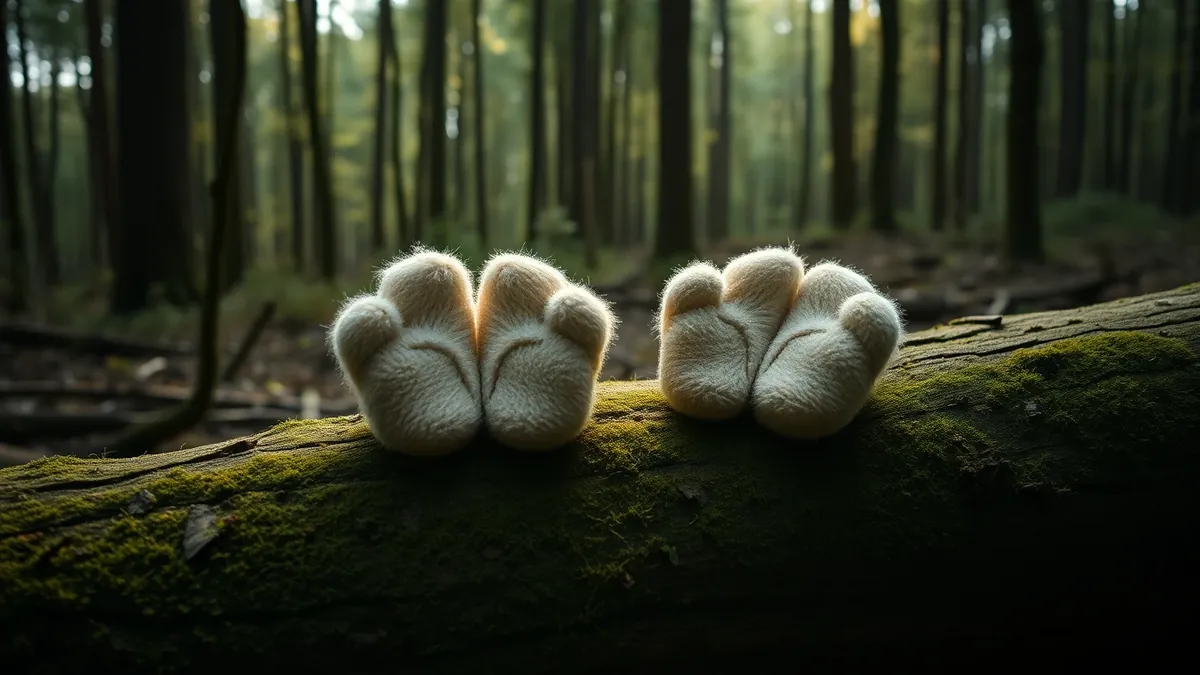
They’re out in the woods where they’re not supposed to be. They’ve taken their mother’s slippers, the ones shaped like the gi-normous paw of a non-existent animal that she got one Christmas. If she had to get slippers, she liked these best because they made her smile when she looked down at her feet, and not a lot of people anybody knows smile when they look down at their feet. It’s just an underappreciated body part. With the wheel and all of its technology, maybe people figure, like tonsils and gall bladders, do we hardly need our feet anymore anyway. I don’t know; I’m just saying.
It’s always kids and joggers finding dead bodies. Never regular people like movie stars or cartoonists or contortionists or environmentalists, who you would really think would be outside all the time and would find stuff. Just kids and joggers.
The jogger passed me by. Her new tennis shoes are that good. The kids aren’t supposed to be in the woods because their mother said there are ticks. She explained how ticks are worse than vampires because vampires will just kill you dead but ticks leave something slow and disease-y behind. She said the only way to kill a tick is to burn it. The kids have never heard of that, a bug that you simply can’t squish. So they set out into the woods to see that kind of bug, and to make monster footprints with the slippers. They hope they will trick somebody into thinking there’s a Bigfoot living in these woods. The kids don’t know how to read a map; if they did, they would see that this isn’t the Pacific Northwest, and Bigfoot doesn’t do Baltimore.
I am turning blue. Air is what ages a person and I don’t care what anyone says. It’s what might help keep us alive, seesawing through our lungs, but did you ever see what happens to a perfectly good piece of fruit if you leave it out on the counter for a prolonged time? It starts to cave in on itself. A body, 72 hours dead, will go the way of that perfectly good piece of fruit, and while I am still recognizable as someone human, soon I’ll get to that place where I’m unrecognizable as someone that you might know. I’ve got maggots and flies, and I give them their due — how they find me and all others like me is uncanny, considering their brain is what?
So small, almost unimaginable at best. The kids will find me soon. I am not that well hidden, being dumped, not buried. It rained on me 24 hours into this, and the rain had wind, and the wind blew some leaves and twigs and some muck, and oh, an old discarded plastic bag. I know that it is old because the name on the store that is stenciled on it is no longer in business. Those damn plastic bags really do not decompose for, like, forever. Two man-made things, a human body and a plastic bag, and the bag has got the immortality rap down pat.
The kids are siblings. One is a boy and the other is a boy too, only he wishes he was a girl. When he was littler he wished he was a giraffe. Everyone was worried; what was with that?
He didn’t dress like a giraffe or walk like a giraffe. He just liked giraffes. It had to do with their necks really ... they were beauty stretched out to the boy. He couldn’t understand what all the fuss was about. His father, especially, was angry about the whole giraffe thing, saying he should like dogs if he was going to like any animal at all. Dogs were solid, loyal and protective.
Dogs lifted up their legs and pissed on things they wanted to piss on. His father liked that. His father didn’t like how the son responded that dogs sniff each other’s butts. He didn’t like that at all.
The kids haven’t discovered me yet, but they’re close. It’s like that game, “hot/cold” when you want someone to find something but you make them work for it ...you’re warm, you’re warm, warm, ahh, you’re cold now, really cold, freezing, oh back to warm again. When the person playing gets hot, the person wins. These kids are warm in their discovery of me, lukewarm, and I knew a boy once, and his name was Luke Warner, and I am thinking of him right now because I have it on pretty good authority that the mole on the back of his neck that I stared at for two straight years from sitting behind him in Spanish and Math will be the cancer kind in about ten years. I don’t know if he will recognize me in that time — I might be the girl they found in the woods and he might not even remember that I sat behind him all that time, and if I could, I would warn him somehow, but I can’t, like I can’t even tell these kids that I am over here and they are so warm right now it’s not even funny.
They are starting to smell me — it’s all but the memory keeping me alive now — and it’s not the perfume that I put too much on that my mother said I was too young to wear. I thought she was watering it down anyway because it’s not like my father ever bought her anything a lot of the time. She got it from her job working the cosmetic counter at the local five and dime store.
A hundred women had maybe pressed the pumper for a free spray, rubbing it into their wrists, their necks and what was left of their cleavage. New samples came in all the time, and my mother would swipe the old ones, putting them delicately in the front of her cosmetic counter apron. She was the only worker at the five and dime who got to wear an apron full of pockets so she could always have a tissue or a cotton ball or swab available at moment’s notice to help a customer in application mode, which meant help some ugly person think they could be all of a sudden drop dead gorgeous with a dab of lipstick or a swatch of rouge. “Everybody can dream,” my mother always said. I never remembered any of mine.
Right now, there are two of me: the me that was on the inside, now released and if you could see me at this very moment in my freedom, I would be all shimmer and light, hanging like streamers upside down in the trees. And of course there is still the dead girl body that used to be me. Needless to say, at this time I much prefer the new me that no one can see. The others that are like me, they can, I mean, we can see each other. We stream in and out of one another’s space. It’s a very sparkly existence. It should be blinding but it’s not; we no longer have our eyes, but we can see everything and more, just fine.
The others dead like me check on me from time to time, to see how I am getting on. This one shimmer, just a little older than me, says as soon as the living find my body, I can move on up to the next level. This shimmer was murdered, too. It took them, she says, six months to find her body. She says they really didn’t look hard enough. This is her opinion but I think that it is probably the right opinion because she was hovering by her own body for that long. She says she was a pretty girl once, but by the end of the process, her looks had all fallen off, and they eventually i.d.’ed her with dental records. That’s why it’s important to go to the dentist, she says, because he can brush in places where you just can’t see because of having his dentist eyes, and they make a permanent record on you for in case you get murdered and they can’t figure out who you are any other which way. It’s a surprising thing, to hear this about teeth ...
Just when you think you know they’re only good for eating and smiling, here they are good for when you become dead in a grisly way too. The things you learn when you’re no longer in a place. It gets a wow out of me, that’s for sure.
The kids are tired from the whole Bigfoot print making business. They’re learning that it’s exhausting stepping into the shoes of another person; even though Bigfoot goes barefoot most of the time, there’s still a lesson to be learned here. The boy that wishes he was a girl wishes they had listened better to their mother when she said don’t go into the woods. He is starting to feel closed in by all the trees. He becomes reflective about green, and is sure that it is definitely not his color. He can’t figure out what fashion statement nature is trying to make, but he knows it’s definitely not one he will probably share. His brother is also sick of the whole thing too, but he remembers their dad, when he’s not screaming about giraffes and how boys aren’t supposed to make sense of fashion yet alone fashion statements, screaming about how it’s important to see a job through. Maybe he’s not screaming — maybe he’s just talking loudly — maybe good work is important to him — maybe sticking with things is important and that’s why scotch tape is still around, even surviving over glue sticks and paste and even the glitter glue phase from a few years back. Maybe it’s that his father got stuck with their mom who was a very pregnant girlfriend and he did the right thing, and so the older boy was born with a mother and a father, followed by his giraffe brother, and their father sticks with it, sticking every single day, and everybody knows the thing about sticking with it, while commendable, can make certain people grouchy and resentfully mean, and the boy is certain that while his father has certainly become one of those people now, he is certain that this is not how his father started out nor intended to be.
So the giraffe brother who wants to be a girl says, “I wanna go home.” And the older brother says, “me too”, but it’s the voice that sits inside his head where he’s the only one who hears it, and the giraffe brother says, “what?”, certain he heard something, and the older brother says “nothing”, because he doesn’t want to give it away that he talks to himself like a parrot. He knows that he should probably let his younger brother know this very vital information — a sharing of their proper animal instincts — but parrots are too colorful and too crazy and kept in cages by little old widowed ladies desperate for a conversational companion.
Instead, the older brother says, “a little while longer”. The Bigfoot prints are starting to look ragged and poor. “We have to finish what it is that we started.” The giraffe brother marches his shoe into an ant hill, mashing it into dust. “How will we know,” he asks, winding his foot in circles until the ground is smooth and recreated, “when that is?”
He never gets a reply.
I wonder how pissed off ants get when we interrupt them. They seem to have precision down — from the lines they travel in and the earth they push into their triangular domed homes to the transport of a singular piece of food that qualifies more as a particle if anything at all. I once watched a boy I didn’t really know all that well hold a magnifying glass above an ant mound, setting fire to it from the sun. It was hard to believe something as far away and as mythical could light up such a blowtorch blaze all the way down here. I am closer to this sun now than I have ever been, and I try to stay away, in a most respectable way.
“I’m going,” the giraffe brother says. He turns on his heel. The ant mound is totally decimated. I wonder how many called it home, and if there are any survivors who will live to tell the story of an ordinary day pockmarked by a sudden shadow and its crushing moment of death. Broken ant bodies everywhere, and it doesn’t take much to break an ant — they’re not constructed as well as, say, a sofa. My mother has a sofa in her front room, handed down to her from her grandmother. She remembers from her own childhood that sofa wrapped in a plastic covering, and how it always made kissing sounds when you sat on top of it. When my mother became an adult, her grandmother became an even older adult and went on to die. My mother took that sofa because that’s what adults do when other adults die, take each other’s stuff. First thing my mother did was take down that plastic, I mean, she cut through it like a surgeon, revealing some kind of beautiful underneath. We wore that sofa down with spills, and dirty feet, and the perspiration and oils from our skins, but that sofa couldn’t be broken. Sometimes it only looked that way. I’m going to miss that sofa, in every way. The giraffe brother turns to see if his older brother is following him. He is not. The giraffe brother wishes he was taller or wider or bigger or longer or anything different than what he is today. He fears his older brother will always win. I wish I could tell the giraffe brother that the older one, by virtue of birthright, has already lived longer days than the giraffe brother has not even acquired yet, and he should hold on, because that time is over for the older and not yet lived by the younger, so giraffe, you have really won. But I cannot tell him anything; he’ll have to live to figure that out for himself.
So the giraffe brother, he picks up a rock. He doesn’t know why. He’s never done this sort of thing before. It comes from wanting to be heard, to go home already, to be taken seriously, to be appreciated, to be put in the right direction out of these woods because he doesn’t know exactly where he is and where he should go to get out of where he doesn’t know he is. The rock is small, but it is no stone, and hasn’t yet gravitated to boulder status. It feels fuzzy in his hand for a patch of moss has claimed one side of it. He waits a moment, to see if he changes his mind. When that moment passes and he does not, he waits another, just to make sure. He throws the rock, intending for it to be a hurl, but in reality, it is only a toss. It lands at his brother’s feet. He curses the rock.
The older brother curses his younger brother. It’s when the giraffe goes to lift a much heavier rock that the older brother charges him. I watch them hit and tossle and wrestle and pound and spit, and it makes me yearn for the sibling that I never had. What fun it must be for one instant to hate someone so much, and in another minute to cling to them as if they hold the key to your very existence. Their movement takes them rolling along past weeds and leaves and twigs and litter and animal paths, and a damp wet earth that is the underneath canvas for it all. It is when the older brother is on top of the younger, pinning him down hard — arms holding arms, and knees holding knees, that he gasps, suddenly letting go.
“What?” asks the giraffe, immediately thinking that it has occurred to the older how are they going to explain it to their mother, as they are bumped and bruised and covered in muck from head to toe. But it is not that realization at all. “Oh god. Oh Jesus Christ,” the older says, the words of deities weaving through his lips, his face wearing the look of terror. The younger brother, slow to get up gets only to his knees before he, too, rips the look of terror off of his brother’s face, displaying it as his own.
“Is that a person?”
“I think that it is.”
They have discovered me. My pink tennis shoed foot. There’s no mistaking; there’s no denying; there’s no going back to a fun day of Bigfoot prints.
“Is she dead?”
“I think she is.”
The older one asks for a stick. The younger one is dutiful. The first stick breaks when it is tested against my shoe. The second stick is thicker, though not quite as long. It is good for tapping away the brush that has been my blanket.
“Do we know her?” the giraffe asks.
“No,” comes the reply. “We don’t.”
They are still, never having felt more alive than they do at this moment, standing over a dead girl. And when the giraffe brother leans a little too much into his brother, the older one doesn’t mind much at all, even leaning in a little himself, too.
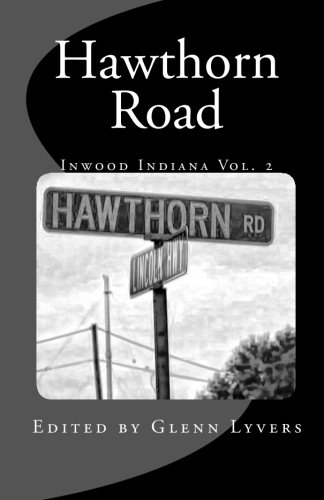
“Dead Like Me” was printed in Hawthorne Road, No. 2 of Inwood Indiana. Pick up the paperback from Prolific Press; the stories and poems published online are free to read here.
Get the paperback