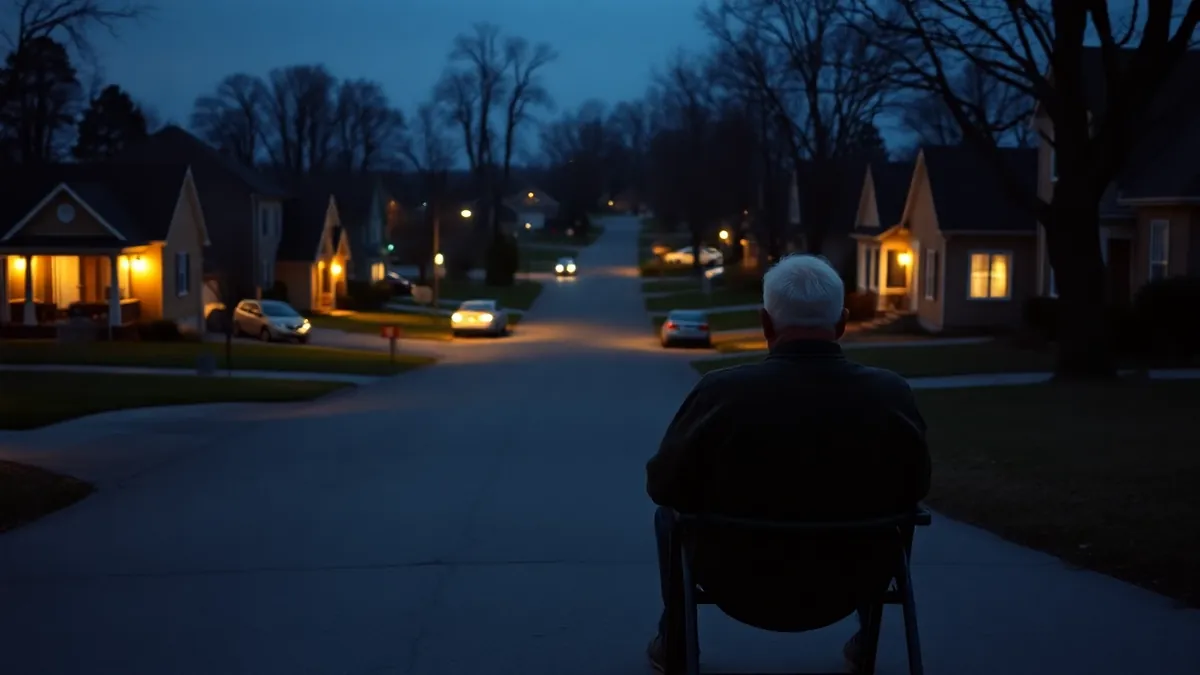
OLD MAN MCGREER never left the area he’d been born into; he just didn’t. He liked to say his parents had been the first couple to move in there – the sparkling houses on the glowing streets – and people didn’t contradict him. Now, heading into his late 60s, he could admit at least to himself that the constant battles to make his family one of the more noticeable around had left him soured on the place. Many times he walked home from the pub roaring terrible slurs, the kind that would’ve had him raising his fists if he heard another man making them. But now it was getting hard to care about any of that. Six months earlier, his wife had passed away after a thankless tussle with lung cancer, and seeing that his children and grandchildren were happily terrorizing the streets and would be sturdy in the face of future battles, McGreer applied himself to his new fight: drinking himself to death.
Every day since, and including, the funeral, he’d sat in the pub for a few hours as soon as it opened. That was a start. Then he’d come home and pour the whisky. It was cheap stuff, supermarket own-brand, but that hardly mattered when he was pounding through three bottles a day. This last week, however, the nights were drawing in, and having felt something coming on, something gathering, something tugging, he had allowed himself a more expensive brand. He also stepped it up to four bottles a day.
His usual routine was to shiver out of bed at 11 o’ clock for a doleful stint in the bathroom. He believed it shameful to vomit the next morning – the night during couldn’t be helped, but the morning after, no, it put him in a bitter mood. That day, up at closer to noon, he was fine, more or less, hangover-wise. Everything else was truly terrible, blocks of pain and things seeming to be sliding down in his carcass, but at least there was no headache and little nausea. A bacon sandwich and a pot of tea left him hankering after the pub doors, the barmaids’ chat, and a seat by the window.
Soon after he dressed, he felt the rushing again. He could think of it no other way than that – a rushing, a breeze just for him, plucking at his clothes, his skin. He’d been feeling it off and on for a few days, and it made him slightly nervous. That day it was a little stronger, so he thought he might have a drink indoors before heading out. Not a fortifying one, just a general drink.
His house was never empty. Some of his children were there again, moving back in when their relationships came to their usual draining conclusions; now there were grandkids in the same situation, he gathered. He no longer took an interest in their ramshackle lives, if he was honest. That had been his wife’s job. They themselves filled him in when they thought to, but it was impossible to keep track of it all, and there wasn’t much new in it anyway. He came into the front room, where a couple of grandkids and their young friends were lounging around, smoking. Beyond nods he ignored them, they ignored him, and the first drink was poured.
There were photos of his wife as a young woman on the mantelpiece, carefully arranged by him now that was gone. He didn’t always feel he had to look at them as he drank, but that day he did, and when he did he almost forgot he had a glass in his hand. Something was up. He looked around, but no one was taking any notice of him, and it wasn’t a joke he thought they could’ve played, even with their computers. He analyzed himself and passed himself as sober. He closed his eyes, tried to settle his mind, then looked again. It was no good. One picture had been taken at the fair when she was in her 30s. Her smile never revealed her teeth – she was self-conscious about their mild snagglement – but now they were showing, and it quailed him to see it. In another he was sure that, previously, only one of her hands had been visible, and in the one directly above the fire she was wearing a heavy necklace of beads he couldn’t remember ever seeing (and he’d been attentive to those things, at least). There was a cropped hairstyle in another that he was positive she’d never had, as she preferred her hair long whatever the fashion was.
He could’ve been mistaken, he thought as he sat back down, but he couldn’t convince himself of that for a second. There was no point asking anyone else in the room for their opinion, and he didn’t want to know anyway. He spent an half an hour with the bottle, then got out of the house.
There were three other pubs on his patch, and though normally he disdained two of them, he didn’t question it when he felt the urge to visit them. The first was on a street he had no reason to go down, that was why it looked slightly unfamiliar.
It was full of office people on their lunch break, which disappointed him and threatened any kind of mood elevation, since he’d never liked the sight of too many suits. He had two double whiskies, immediate cannons, and was ready to undo his belt and parade round showing them his bony backside, but thought that might be too undignified: today was looking to be a different kind of day, special to some degree. He had a steady few drinks and the odd scowl if an outfit was particularly offensive. The smell of the food struck him, but not as much as the chalk for the pool table. It was a while since he’d smelt anything vividly, much less anything that made him think of the color blue.
Some people in there knew him, but not all of them wanted to talk to him. Those who did found themselves sitting with a man putting no effort into making sense, so soon abandoned it. After four more drinks, McGreer lazily tipped over his table. The drinkers looked around, and were prepared to dismiss it as an old man’s accident, until he started laughing. He was asked to leave by a shaky young barmaid, and was happy to be on his way, after some nasty words.
It was a ten minute walk to the next pub, but he didn’t get there for nearly an hour. Across the road from the park he got his eye on a young woman with curly red hair and – no doubt – freckles across her nose, who reminded him of a teacher he’d had a painful crush on as a teenage boy: the one he’d daydreamed over endlessly, the one who spurred him into his first masturbatory session (and who had cropped up in there now and again for decades), the one whose car he’d confusedly scratched on the last day of term. It was a startling remembrance, complete in every way; he could almost smell her from across the road.
A few minutes later he passed a man who was the double of someone he’d fallen out with at the engineering works in the 80s and had campaigned to get ostracized. He actually stopped, turned, and watched that man walk away. Even from the back he could see the similarity. For a while after that he kept his eyes to the ground as he walked, but that was dizzying and dangerous. In a doorway, checking his watch, he thought that was his eldest daughter’s first husband, who had died fifteen years before in a car accident, which McGreer had been not-so-secretly glad about.
He bought a few cans and some fish n’ chips, and had them sitting on a bench at the shops. He was just about able to keep them down, while watching the world go by, as they called it without really knowing what that meant. Dogs had to be waved away. Children looked at him, as though eating out in the open, in the cold, was a freak show. The hope was that he would see his wife as a nineteen year old, the age he’d met her, and that she’d come and talk to him and reassure him and leave him feeling happier than he ever had in his life. Instead he saw a woman he’d had a quick, unhappy affair with in his 40s, and looked quickly away.
The next pub’s decor was too soft and cozy for him – it was all dark browns, gold lights and red wine carpeting. There were old world pictures up of people in thick clothes at the beach. More importantly, he didn’t like the young ones who drank there. They seemed to have their own ideas about running things on the estate, ideas he found feeble. Plus, it was clear no one there was delighted to see him come in. He smiled as widely as he could, and offered to buy a drink for the person next to him at the bar. This was declined, neither rudely nor graciously. He got a double whisky and went wandering around the place, not liking what he saw in those beach pictures.
Two young men and a girl were on the pool table, and when the game was over, he wondered if they’d like to see some trick shots. They shrugged, stepped away, paid little attention. It was a shame, but his eyes wouldn’t stay clear, his fingers and back hurt, it had been a while since he’d tried these shots, and the three of them were on drugs anyway, so he playfully jabbed the cue at their ankles and crotches before the girl took it off him. She would’ve been pleased to do more than that, he saw.
They could’ve thrown him out then, but a few of them came over and said, look, he could stay if he sat still and behaved himself. One of them sat down with him when the others left, started to talk, and McGreer made attempts to be coherent, but the conversation kept making untoward turns, with the young man, he thought, taking the piss; McGreer tried to direct it down more inflammatory routes, but these were headed off in an admittedly quite charming way. Apparently he wanted to hear stories about the old days in the area, but McGreer wasn’t about to waste them on him.
After three further tense doubles, he said he was going to the bastard toilet. On the way he tried to throw a stool into the mirror behind the bar, but they were ready for him, the stool was taken out of his hand at the height of its swing. One of the big ones escorted him out and wasn’t too gentle about it; if today had been more normal-feeling, McGreer might’ve rounded up the family and sent them across. He had to settle for swinging a harmless fist into the big man’s tits, and leaving without even summoning up any spittle for the floor.
After a piss, he headed for the last place, talking to himself, occasionally raising his voice to himself. Women formed the bulk of what he talked about, the affair, in harsh outlets. Halfway there, the wintry afternoon light made him stop and almost shed a few tears; but a few steps further on, a few deep breaths, and he was feeling formidable again, he could talk about the area. The slurs rolled out, more inventive than usual. Every other person he passed was someone he knew, though he wasn’t always sure from where or when so tried not to worry. Some said hello, some kept their eyes off him, and he didn’t speak to any of them. That rushing feeling was growing stronger, half-rushing, half-hurtling.
Inside, in the warmth, there was a tiredness yapping at his fibers, though perhaps there was something else in the core of this tiredness, some heavier drain. Feeling brave, he ignored his designated stool and stood for his first drink, which was a treble of the best whisky on offer. He saw it off a little too fast, with embarrassing results, not making it to the toilet in time; he leant panting against a wall, and the bar staff took pity on him, told him he might be better off at home, but he shrugged that off. He wasn’t the type who stopped drinking as soon as it started rebelling. Though he did sit down for the next few.
People sat next to him, but he was too nervous to speak to them in case they said something that shocked him back into sobriety. There was no one he could talk to about his wife, had he been able to shape the words anyway. It was true he hadn’t loved her for years, maybe you could say decades, so how could it be he was lost without her, what did that say about the arrangements of life? What philosopher drinking at five in the afternoon could answer him that?
Someone came in who looked like a neighbor of his parents from all those years ago, and if you couldn’t have brimming eyes at the sight of their straight back and forgotten hairstyles, then you’d already died. A man came in, also from work years back, the drinking buddy who’d moved away, and began talking softly to the old neighbor. He knew that if he went over and started talking, they would look right through him. Then a girl came in, maybe someone from school, and she stuck a match, lifted a strand of her hair, and set it on fire while looking at him and smiling. He looked away, and couldn’t get the glass to his mouth for trembling.
He said goodnight to the barmaid with more than usual politeness and walked out. There was no one about now, not even the sound of distant cars or doors, which he had known would happen. Even the amount of alcohol he’d had couldn’t immure him to the cold. Almost home, maybe five minutes to go, his legs lost their force. He had to sit on the ground, one hand propping him up, then the strength left that and he was lying down, not able to breathe very well. He was in an out-of-the-way street, little better than an alley. It wouldn’t do, but he’d had enough, couldn’t even move his thoughts now. All those pains were sliding into one another, waterfalling. The sky was showing a range of blues, and he believed that the clouds were making the same pattern as they had at the moment of his birth.
When he knew himself next, he was in a white room. It was clean, spotless even, with a door, though not a window. He was sitting on a blue plastic chair, behind a bare wooden desk; he was dressed the way he had been on that day, though his clothes felt cleaner. Taking a moment to check himself, he decided that he felt better physically than he had for months, maybe for years, but mentally he didn’t feel good at all. It felt like he was in a slow explosion, one that wouldn’t end till everything ended – if it would ever be allowed to.
Soon the door opened and people began to enter the room. The first of them were like the pictures in books of primitive cavemen, though not quite – straighter, maybe, slightly more intelligent looking. They had only the first scraps of speech, which didn’t stop them using it on him. It was hard to say if they spoke that way to everyone, though he doubted it. He gathered their comments were designed to be hard-hitting, and they made him flinch; there was no doubt about that. When they left – after they’d turned back for a few more tics and grunts – others walked in. Some, in fact, hurried in, put their hands on the desk, leant over it. Others, not always the women, were grappling with hurt tears.
It took him a few hours to realize what was happening. It became clear when he started to see himself, or his parents, or his children, in some of these people. Women from the Elizabethan era who had his mother’s eyes; a man in woad with his father’s timbre to his garbled voice; a woman in a ball gown with his middle daughter’s mouth; gestures made by men from Victorian times that were replicas of those made by his father (and probably himself) when in the vilest of moods. The worst were those that looked like him. One, from the middle ages, was an exact copy and made him whimper and turn away. He saw himself in some when he’d been young, and in others how he’d look soon, perhaps before the day was out: ancient and permanently devastated. After the first hour, they could all talk intelligibly, and they all said the same thing: the disappointment, the anger, the shame. None argued among themselves. They all agreed: it was the loneliness he’d put her through.
He kept quiet until the procession reached great-grandparents, recognized from creased black and white photos, then grandparents, barely remembered, dying largely unnoticed in his teens. To these he protested that he knew no better – an argument that was swept from the air with clawed hands.
To his mother, when she came in (his father lingered by the door, wouldn’t look at him), he offered an apology, asked her to pass it on if she could. She couldn’t, and it wouldn’t be accepted anyway, and making it had done him no good.
Something opened behind him, hands gripped him, tipped him backwards, and he was dragged away to the steel vaults.

“The Crawl” was printed in Hawthorne Road, No. 2 of Inwood Indiana. Pick up the paperback from Prolific Press; the stories and poems published online are free to read here.
Get the paperback