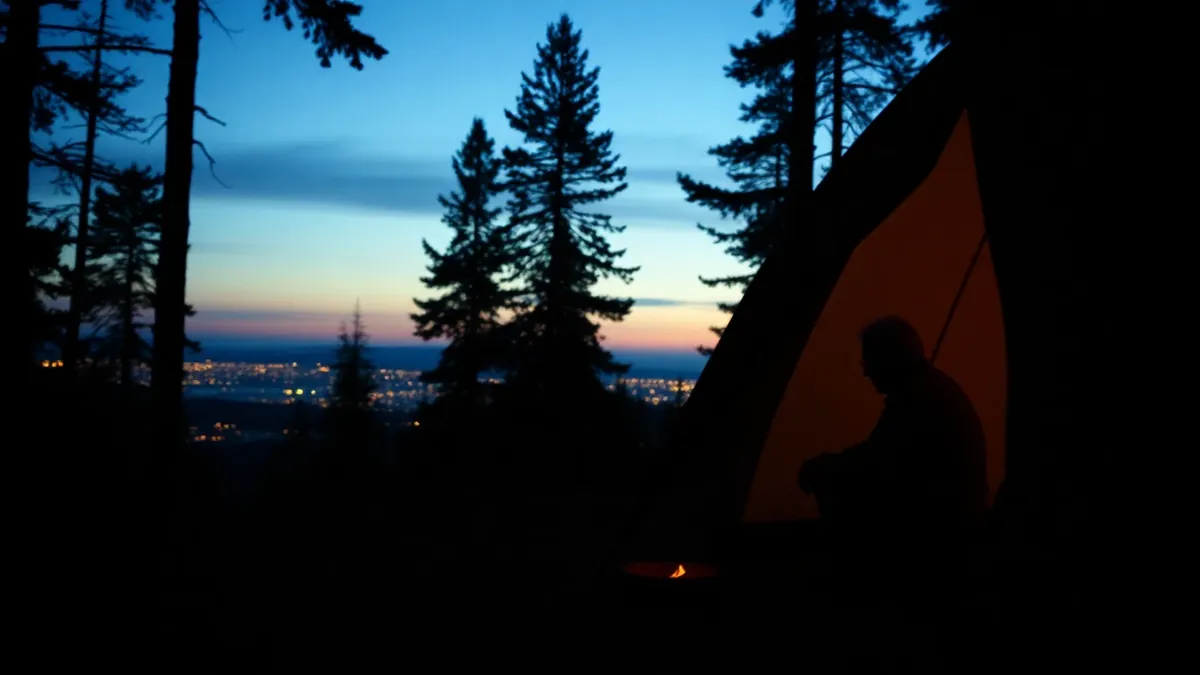
Tonight the children of Cain sleep, separated by concrete and panes of glass, in high-rises and on the sidewalks of the world. Their old man walks the earth, he has never had the city dust touch his soles, and bright lights are for those who think they have hope. He creeps in the dark of the shrinking woods, peeking through tent flaps, seducing lost hikers. He still appears to be the twenty three year old he was when the curse was set, it is possible that he has bedded down one of his own once or twice, a brain a few millennia old is not good at remembering. The only memory that sticks is the sound of Abel’s blood, screaming as it sunk down into the roots of the crops the Almighty had turned his nose up to. Sometimes he catches the faint echo of similar screams as heart embraces knife, hands go around a wife’s neck, or a gun is pointed in accusation at another favored son. His children, after all, must do what they must do. But he walks on, the heart which might once have felt the tug of remorse now nothing more than a bag of dust.
In the beginning, there was remorse at getting caught, anger at the blood, at God for His curse, and later at his parents for starting over. For himself, but also for the brother he had murdered. How could they forget their beloved sons so rapidly? All that weeping and gnashing of teeth turned over in less than a year’s time into the moans of pleasure and childbirth. Cain would crouch and listen in the darkness, clenching and unclenching his fists in rhythm to his mother’s cries. It was with equal pleasure that he later ripped one of those unnamed sisters from the family hearth, stealing her away in the darkness of night. Sending her back in the morning to face the shame, hair covering her face as the rest of the family turned their backs, as if his touch had left a stench upon her skin that they could not bear. It was a pleasure he repeated again and again, until the others were forced to guard the camp through the night to save the few daughters who remained. They carried spears, stabbing menacingly into the brush, but it was the torches that caused him to cower.
The earth still spoke in whispers. His love, which had sucked down his brother’s blood as fast as she could, seeking its nourishment and hiding the evidence. He tosses in his sleep, digging his fingers deeper into the dirt, feeling its warmth. She cries out at his touch, demanding, seeking an answer to why her children were not accepted. All these years, since the raw smell of her beneath his fingertips first overwhelmed his body, the sting of her Creator’s rejection never wanes.
Sometimes, hiding in the edge of camp, he would hear his own story told, again and again, to frighten young children and shame the almost grown. He would hold up his arms and legs to the snatches of light, trying to find the mark they spoke of in whispers. Eagerly he would listen, when another child would interrupt the storyteller and ask what the mark looked like. But always at this point the storyteller would cuff the child behind the ears in a warning not to interrupt, and go into another story.
He would then crawl away, to find a hole in which to sleep. Unless it was the story of the fall, then he would stay awhile, relishing the demise of his parents.
A millennia passes, maybe more, and the story around the campfire never changes. As the lost tribes flee across the Bering Strait, he tags along behind with the feeble and lame, settling in what will soon be the American Midwest. Age slows him down, causing him to wander in the same circles. He befriends a priest, who considers him the ultimate challenge, the irredeemable man. A month will go by, maybe two, and he will knock on the church door, blackening with decay, and the old man will welcome him in, offering shelter and perhaps a game of chess. He tells the him of the ancient world, how far off those blue eyed renditions of the Christ are, making him chuckle through his ash dust beard.
It must have happened gradually, the ending of tales around a campfire. Now when he tells his latest conquest his name, their eyes crinkle up in confusion, not fear.
“Whadda ya mean, like Citizen Kane?” is a question that comes up, once or twice. When he explains, no, like the brothers in the Bible, their eyes begin to light up, “ahh, okay, like East of Eden.” He has never been to a movie, cannot picture the bending of light and the capture of images in his mind.
Neither can his friend, tending to keep away from those things termed by the Vatican as “worldly”, but seeing the agitation in what has become his light in a swiftly dying congregation, he concedes. They walk into town, and arrive beneath the glowing marquee, Cain cowering under so much light. The darkness in contrast within is comforting, reminding him of the caves in which he grew up. Before the glowing screen, both men sit and wonder why God has not yet struck down those who would make themselves like gods. They walk back to the church in silence, each guarding his beliefs. Back inside, he tells the priest that James Dean reminded him, ironically, of Abel, the good looks that came too easy, the vulnerability behind the eyes. He has never before spoken of his family, and the old man listens with the attention of a gossip, going over every detail, asking questions. He asks him about Eden, if he remembers anything about it. He closes his eyes, and in his mind he can see a black circle of trees on an empty plain, forbidden and unattractive. There is no recollection of angels or a glowing sword, and reading over to the beginning of Genesis does nothing to jog a memory of them.
That night, under the stars, they come to him, blue flames bearing the faint outline of wings and blades. He wakes in a cornfield, blanketed in frost tinted leaves, covered in sweat.
A night, similar to this one, so cold, and the stories his parents have told them about the constant warmth of Eden turn over in his head, keeping him from sleep. He nudges out from under his mother’s arm and sneaks away from camp, towards the circle. In the night, when all is darkness, it doesn’t seem so forbidding. As soon as his fingertips brush the bark of the first tree he reaches, they are upon him, all the rage of Heaven roaring in his ears. Had he been a man, his father is told by the seraph that carries his stunned body home, they would have killed him. Over Abel’s broken body, Adam will demand of Heaven why they did not, how one child deserved amnesty over the other.
As the story rushes out, the priest is reminded of an article he has read, soldiers returned from war, unexplainable phobias, frightening dreams, triggered by moments so subtle, they are only unearthed by years of therapy, shock treatment, hypnosis. This is a man, old as time but still, to him, so young. After Cain has left he drops to his knees, begs forgiveness of Christ. This is a man he has treated like a relic, to be gawked at, combed over to fill the holes of history.
Their friendship suffers this revelation. The old man now treats him gently, seeking to meet needs he imagines he has, a new coat is bought from the leavings in the offering plate, pockets stuffed with a pocket Bible and religious tracts. The love suffocates and confuses him, his circles become larger, until the church leaves his path altogether.
This year’s first snow smells of rotten eggs, thanks to the paper mill sludge being dredged up the creek banks. Kate looks out, nose tucked into her shoulder, up to the elbows in soapy water. Springsteen is singing something on the radio about waiting and falling behind. Behind the steam webbing up the glass, black trees wave off the sleet, looking as if they want to be let in. If the cold wasn’t seeping into the joints of this old house, if her roots were as firm as theirs, Kate might be inclined to open the door and bless them with a little warmth. But as it is, the only things falling behind are bills, and waiting just brings the spring and more layoffs, so instead she sinks back into the tub, letting anthem chords and water wash over her.
It was the hopelessness of the situation that had pushed her out the door and into the woods on a January morning. She did not know what the future held, but could be certain that at least outside she could be alone. Even that turned out not to be true. She did not see him, walking through the trees as if he were walking the aisles of a department store, until they were almost upon one another. She did not usually take to strangers walking around so close to the house, but there was no guile in his eyes, no hint of a threat. It was not until she woke up under sheets already cooling that she realized there had been no passion, no warmth in them either. His eyes had been as empty as the branches scraping the siding.
Solitude came naturally to her. When the time came at the end of school to either move on to the crowded dorms and lecture halls of State or get a job, she chose the mill. She kept to herself among the other workers, all her mother’s friends, sitting alone with a cup of tea in the lounge on break, walking through the wood home, refusing the offers of rides. In the house she stayed mostly in her room, sleeping, reading, watching the TV she had bought with her first paycheck. Her mother had tried to pry her out from time to time, insisting it wasn’t healthy for a girl her age to keep to herself that way. When Mother finally succumbed to lung cancer last year, Kate’s relief threatened to overpower her sadness.
Now this man had shown up, briefly, and left her with an overwhelming ache for company. She couldn’t understand it. Failed daughter, failed mill worker, and now, failed one night stand. The next day Kate put the house on the market and bought a bus ticket. She was tired of hiding out, waiting for whatever was next. She was ready to go out and find it.
What she found across the aisle in the other window seat was her mystery man. To her annoyance, when she managed a feeble hello, he nodded back with the politeness of a stranger. No recognition, no hint of embarrassment, he comfortably went back to staring out the window at the blurred landscapes flying by.
The speed of the wheels beneath them was a new experience for him. He felt a bit of the awe he had felt at the movies, only now the godlike power was beneath his feet. It reminded him of Elijah’s chariot, flaming through the sky. At the time he had envied the prophet’s ride into Heaven, but now he himself had the power harnessed to the ground, taking him where he chose, and not at the command of God. It was as close to human enjoyment as he had come in a long time, marred only by the glare of the young woman in the other seat, threatening to burn through his collar. The thought crossed his mind that perhaps it was a woman who had lent him a place to sleep recently, but none of them seemed on the verge of a long trip from what he could recall. His eyes were of no use, he had left the glasses the priest had pressed upon him last year as a Christmas gift behind on the old man’s desk, and any figures were now a blur. He’d only been able to decipher the age and gender of the person in the other seat when she’d spoken.
She couldn’t stand it, the longer he pretended to stare out the window, the more ticked off she got. Her mother had always taught self control, turning the other cheek could have been the motto for her life, but mother was no longer here. At the next stop when he got out to stretch those spidery legs of his, she rushed out after him, like a mad bull, and called out.
“Hey, hey you, have you got no shame, running out like that?”
He turned around, slowly, squinting in the sunlight. The face still showed no recognition, only confusion, looking around to see where the cackling voice was coming from.
Close up now, she drew up a breath for another tirade, then came up short. His height was something, underneath the tall trees, that hadn’t struck her before, but now, beside the deserted bus depot, it made him loom, a Frankenstein of a man. The eyes above her were still empty, and she considered for the first time that perhaps he couldn’t see. It was a suspicion he seemed to confirm, no longer hearing her voice, he turned again and trudged inside to find the men’s room.
Kate was left blushing in the dust. She’s always been accused of lacking the social skills of a coyote, but until now that hadn’t bothered her much. People who couldn’t accept her as she was weren’t worth the trouble. Shame made hr slink to the back of the bus and crouch down low. Shame made her miss the fact the man’s seat was empty as the bus pushed on.
Cain blinked in the sunlight at the empty road. He was sorry to see the girl go, her fierceness had reminded him of his mother. As little children, Eve would draw in the sand over and over again the form of the snake, showing them how to pound with their heels at the bulbous head. More than Adam, Eve missed the garden, and saw in God’s promise a chance to get back within its walls. Their father tried to explain to the boys, “A thing of beauty is drawn back to beauty.” He and his brother would practice on harmless lizards, or insects, sneaking up from behind and then driving their heels down, flattening the heads. As the luckless bodies roasted over the fire, they would boast excitedly on how they would do the same to the legless beast. They spent weeks as their father plowed, kicking over clumps of dirt, exploring every creature’s hole, and never found the one mother drew in the dust, again and again, until the day she died, never again feeling the breath of Eden.
It was not until he left the desert that he saw his first snake. Walking through the rain forests of South America, where the air heavy and dark even in midday. He thought perhaps he’s found a home, but the snakes would wrap around his nightmares, taunting his failure, and his feet carried him on. This continent, though, was full of snakes, hiding in the jungle, the forest, the desert. He’d have to tread with care through the scrub surrounding the depot.
Sitting in the field, brush grass tickling her forehead, Nancy listened to the silence. It was a good sound, a sound that almost made her forget the jackrabbits playing kickball in her skull.
This morning she had packed the kids up in the van and taken them to school. A treat for them after the madhouse bus rides, kindergarteners mixed in with eighth graders, it just wasn’t right. They too had appreciated the little piece of quiet they managed to snatch in the morning, the soft patter of home, finding socks, choosing pop tarts over toast, packing lunches and homework, faded into the soft murmurings of the local top 40 station played low. No demands to turn on a Barney tape, no fights about who touched who. It was nice. They all needed a little nice.
Bill she had left on the couch, snoring off another night of drinking away the humiliation of another lay off. It was hard, trying to feed three kids off of unemployment, lifting what little was left in his wallet when he stumbled in at 4 am. The only blessing seemed to be the lack of insurance now gave her an excuse to stop trying. Months and months of driving to different hospitals for the same old tests, and still no doctor could explain the cause of these headaches, never mind bringing an end to the pain. Thank God that was over, she could stop.
There was plenty to eat in the fridge, her mother’s number posted clearly on the refrigerator. All the laundry, the dishes were washed, the floors swept and vacuumed. Whatever folks might say, they would know that she had gotten her priorities straight, she left her kids taken care of. Cash was used for the bus ticket, carrying her out to the middle of nowhere, thinking that by the time they found her, the kids would be grown enough to forgive her. She reached into her back pocket and slid out the knife just as the shadow fell over her.
Looking up, all she could see was a dark outline, like the shape of a man screen printed against the sky. The voice that came out seemed to be just as startled as she was. “Excuse me”, it said, and then it was gone. Nancy lifted up her arms, knife forgotten in the earth to touch the emptiness left behind in the sky. She longed to feel the skin of her babies, the feel of her husband’s lips. She lifted herself up on to her feet and began the long way home.
Cain felt a twitch, walking away from the woman. Why he did not care whether or not the woman was successful in taking her life made him ponder what part of him was still human.

“Cain: A Life” was printed in Hawthorne Road, No. 2 of Inwood Indiana. Pick up the paperback from Prolific Press; the stories and poems published online are free to read here.
Get the paperback