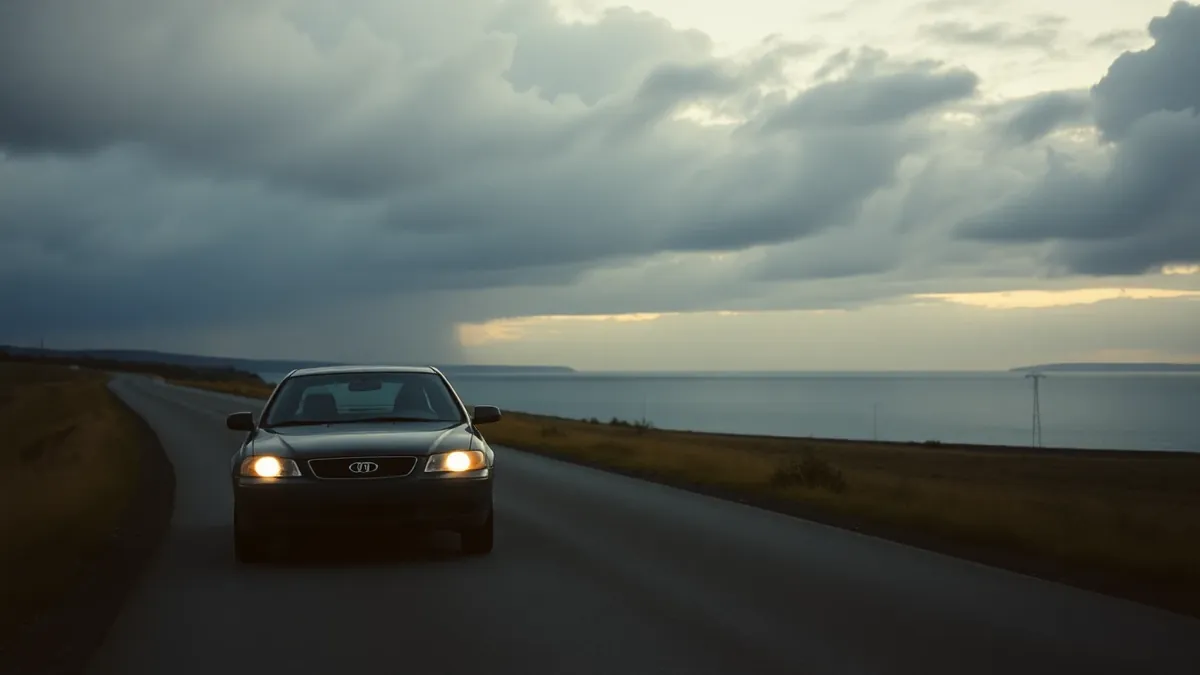
I don’t know how long I had been standing there. It had been a long trip, and I wondered what exactly I was doing. It didn’t matter how long I had been, or how many miles I’d driven, or whether it was about to rain. What exactly brought me here?
The easy answer was Brennan. He was funny, clever, and handsome. He was the first three things I would use in a dating profile. He had everything I did not—and for that and many more reasons I loved. Loved him like a dog, maybe a little too much. I would travel to the ends of the earth for him, so in terms of that metaphor, that was why I had driven to rural Inwood, Indiana.
I had never been to Indiana. In fact, Brennan was the only person I knew from Indiana.
We met in Chicago, somewhere around the time when I accepted I was gay and didn’t care what Rush Limbaugh had to say about it. I worked at a cafeteria; he became a regular.
I first noticed he was gay when he told me, blatantly, when I became familiar enough with him that I asked if the beautiful lady was his girlfriend—“No,” he said, “she’s my sister. I’m gay.”
And that was that. I slipped him my number with his receipt, which he usually never took. I insisted. Told him it was a new policy. We print ‘em, he takes ‘em, does what he wants with ‘em. Brennan nodded heavily and told me he would take it up with the manager next time. I told him I was the manager. “I know,” he said, “and I’m going to book an appointment with my lawyer.” He handed me his heavy-stock attorney-at-law business card with a wink.
That wink captured our whole relationship. It was a six year blink and every time I thought I knew my man, my prince, he became darker, more cynical, twisted, enraged, something like an animal but much more bitter. Then I saw him the way he was, pitch black, an impossibly sexy sinkhole. Then I saw him clearly again, the way he was. But I still loved him.
Turned out Brennan wasn’t in the same guilty nun game as me. When I saw him punch the fridge, I told him I was sorry for burning supper. When he couldn’t figure out our electronics, he smashed them to pieces. He was irrepressibly jealous, the kind that almost came to blows when other guys checked me out—I just thought I was a compulsive flirt.
So six years, complete with an exciting wedding after state law got its thumb out of its ass, we were the first gays in our group of friends to get married. We were pioneers on the brave bold frontlines.
No wonder we ended up as battered as we did. The frontline is no place for lovers.
We were also the first couple in our group of friends to divorce. Brennan was already removed from my buddies, so at least I had them—they understood, even sympathized, and almost convinced me to orchestrate a conspiracy about domestic abuse. Just to screw him over. I almost believed it. More dangerously, I almost admitted that he had actually beaten me, twice.
After a brief divorce process (owing to Brennan’s lawyer peers), he ended up with our apartment and I ended up with the car, the cat, a nice settlement, and the keys to Brennan’s summer home just outside of Inwood.
Indiana sounded like a condensed globe: Plymouth, Warsaw, Kokomo, Peru, all within driving distance. Small towns were strung together by two-lane highways. Graveled roads intersected the landscape mathematically, laying a convenient drivable grid to hamlets, farmyards, and backwoods. I followed the Lincoln Highway northwest, cruising alongside semis crammed with livestock. It was five in the morning—rural rush hour.
I missed the turn in Bourbon and kept westward. For city eyes, the countryside can be mesmerizing or boring—two sides to the same coin that flipped forever but never landed—so for me, I felt numbly serene by the rolling fields, like seas, with tree bluff islands and houseboats.
I stopped to drive through Inwood, which according to my lawyer was empty. A handful of streets formed a triangle off the highway. I drove around the town in under three minutes.
I took South Hawthorn Road right to 12B. There was a cemetery at the T intersection. Fortunately, there was no traffic, because I sat studying the cemetery in the middle of the country. Salem Cemetery. Images of witches and puritan belt buckles floated into my head. Maybe this is where evil came to die, here in the middle of the country, enmeshed with the ground, with Americana fluttering around it like a sparkly pinwheel.
And this was my new home.
So that was the easy answer to what had brought me here. Brennan’s family owned this quarter with the cemetery on it. His dad died years ago, and even though he had banished Brennan from the family, Brennan was all he had. He gave him everything, all in a weepy will that Brennan liked reading before bed, before we had raunchy sex.
I walked the rows of headstones. They were historic, pioneers and turn-of-the-century homesteaders. But right at the back of the cemetery, closest to the two trees, were two new headstones. I was drawn to them. They looked so lively, so vivacious against the ancient mossy tombs.
I recognized Brennan’s name right away. Underneath it was chiseled, “Musa memora.” I remembered Brennan having said that before, but I never understood it. I was too embarrassed to ask. Now I would have screamed the question.
His date of death was months ago. There were wilting flowers on his grave, sparkling with dew. The grass overtop his plot was thin.
I stared at the other grave, trying to decipher the name. It looked foreign. But then I realized it was my name. That was my name. And that was today’s date following my birthday.
Maybe I had slept too long. Maybe I should have stopped in Bourbon for coffee. It was a long trip. I had come a long way. Maybe I drove off South Hawthorn Road, lulled by the hypnotic fields and twilight—maybe I fell asleep at the wheel, and after everything, I found the one place where I could be with Brennan again.
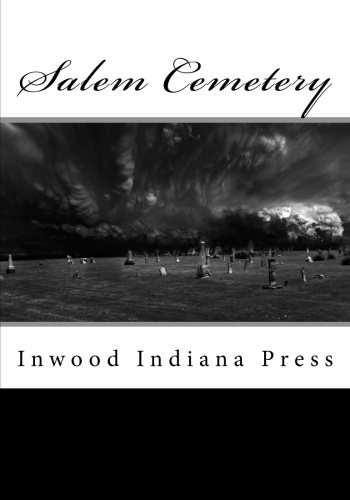
“Musa Memora (Muse, Tell Me)” was printed in Salem Cemetery, No. 6 of Inwood Indiana. Pick up the paperback from Prolific Press; the stories and poems published online are free to read here.
Get the paperback