Every town and city has them – tales of the unseeable, myths of the unknowable, legends of the past come into the present. We know them as urban legends. As a child, I just knew them as local stories.
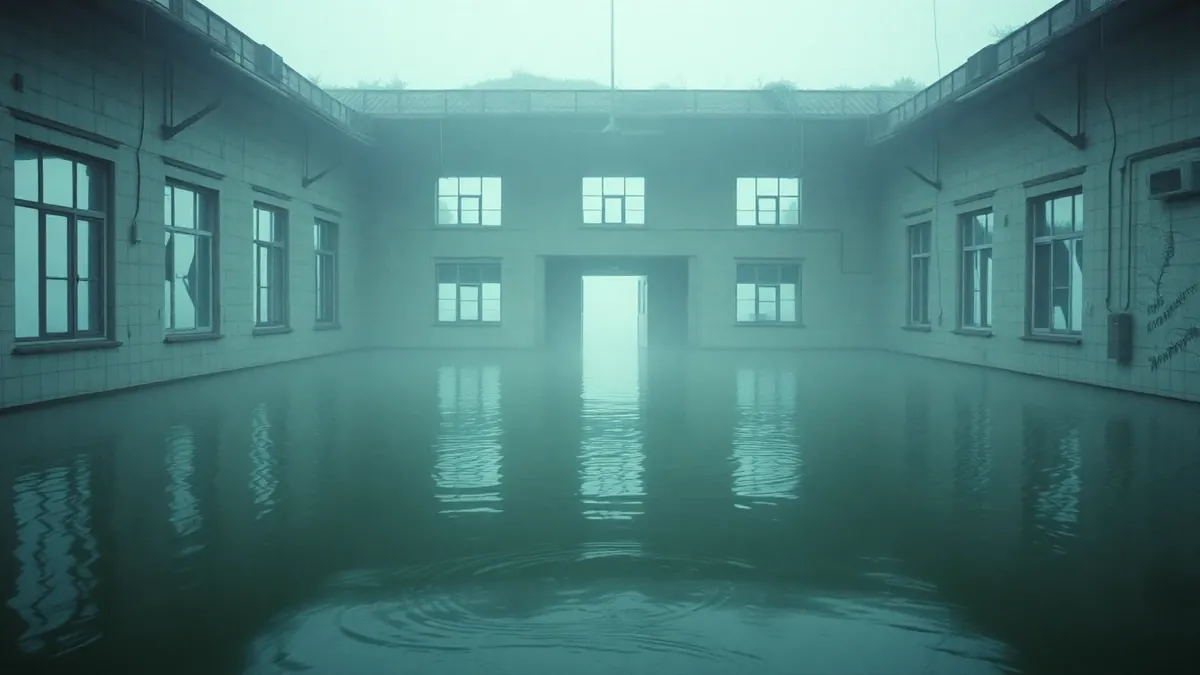
The first one I remember hearing I believed completely. I still recall both the vivid details and the obscure reality of the flooded hospital. Near Sasebo was a golf course used by Navy personnel. My father sometimes took us all out to the site with him; while he played a round of golf, we would picnic and hike the low hills. The story of the hospital began before the war when Japan wanted to hide the buildup of men and equipment. A hospital was built under ground to hide it from spies. Seven stories were built completely below the surface, with only necessary superstructure above ground level.
During the war, the hospital treated casualties from distant battles, men recovering from wounds and battle fatigue. The low hills kept the numbers of wounded from the prying civilian eyes, yet close enough to unload from ships calling at Sasebo harbor. I was too young to understand battle fatigue, or even battle, so drew worse images in my imagination than the realities experienced later in life.
To hide the purpose of the hospital from the west, and salvage national pride in being a nation of strong-minded men, the hospital was flooded upon the surrender in 1945. Being located close to the ocean facilitated the flooded and prevented the capture and use of the facilities by the United States. It also concealed any evidence of the psychiatric wards and patients.
ancient tales / stir imaginations / winter candlelight
The second tale I heard from peers concerned an abandoned building across the street from the apartment building we moved into in 1960. Half of the building held furniture for use by families moving into the apartments. I was able to go there with my parents to select the furnishings we would be using after we moved into our new home. Weather was reclaiming the other half.
Through dusty glass, partly covered by wooden louvers, we could see remnants of broken furniture: a desk, a chair, a filing cabinet.
The story went around that this portion of the building had been used by the Japanese army for offices until one officer shot and killed another over some trivial argument. I even heard that just a few years before I arrived, the body was still visible through the glass, but that time had erased it from view. On some days, when the clouds moved across the sun, one could almost see a skeleton in the shade of the desk and chair.
In the courtyard outside this office was a cement cistern, filled then with rainwater. The story went about that another body had been dumped into this water. Some of the older boys swore that the building had been used as a torture site and the victims dumped under the floor boards or into the cistern to hide them. I did see a helmet, sort of like a pith helmet famous for being worn by explorers, in the dark water. No body, though.
rain waters / collected by time / hidden stories
Beyond the storehouse and abandoned office stood two smaller apartment buildings, which housed the Navy nurses. When Trick-or-Treating at these buildings, a wide berth was given to the old office and cistern. I never went near these two places after dusk.
Weird noises emanated from the building at night; cries of pain, scraping and shuffling sounds, a few bangs and bumps, though I never saw anything unusual.
spirits of men / roaming decrepit halls / winter wind
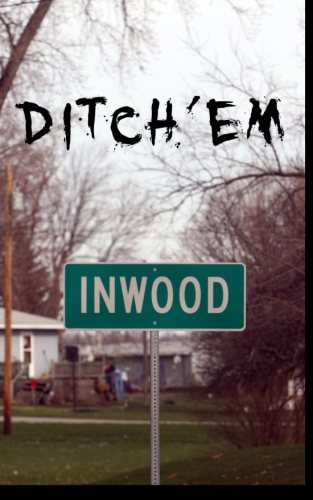
“Urban Legends” was printed in Ditch'em, No. 7 of Inwood Indiana. Pick up the paperback from Prolific Press; the stories and poems published online are free to read here.
Get the paperback