
Dearest M.,
I told a story to a man on a train. He had eyes that crinkled when he smiled, and I know I shouldn't have, but I couldn't help myself. My story went something like this:
Can you hear me okay? This whole thing happened some years ago, when I was still practicing as a nurse. I specialized in psychiatrics, the deeply disturbed. It's not a challenge if you have the right temperament, which I had. One girl I worked with stood out. She was my last patient actually. I’ll never forget the first time I met her. Her father led me into the room and there she was, beautiful, with straight dark brown hair and big amber eyes that just stared ahead at nothing. She had a perfect, symmetrical face, except for jagged scar that ran just above her left eyebrow. Someone had placed her rigid body in a wooden, high-backed chair, and her fingers clenched the handle of a tea cup so that its base was perpendicular to the table. The chair was pushed so far in that she shouldn’t have been able to breathe. In any case, I couldn’t make out the rise and fall of her chest. I almost admired it, how still she kept, like it must have taken a great effort.
I had worked with schizophrenics before, but never one like Magda. I took the job; not because the pay was good, although it was, but rather because I had heard about Magda, the living statue, and I was curious to meet her. I got weekends off to “visit friends and family", but I never did. Once a week I would call my mother, and even though I said nothing, she always seemed to know it was me. "Sweetheart," she would always say into the silence, "When are you going to come back?"
You know, watching Magda wasn’t such a bad job, and I didn't understand how she had run through so many nurses. At worst, the situation could be described as boring. Her father rarely spoke, as if the circumstances were simply too much for him to handle. I rarely heard him say more than two or three words in the space of an hour. He was an American businessman whose company had been shipped to Stockholm, and who had married a famous Swedish ballerina named Matilde Stendahl. He worked long days, rarely making it home for dinner. When I came to the house the first time, he murmured an introduction and led me to the room I’d be sleeping in. He pointed across the hall to the room they kept Magda in, as if he couldn’t bear to enter. Before he left me in the darkness, he handed me a booklet that had been written by a doctor. It had a description of catatonic schizophrenia and a list of instructions—throughout, there were handwritten notes added in a flowery cursive (the wife's, presumably)— "Please play chess with her. It’s really her favorite game; She loves solitaire. Be sure to lay out the cards; Here is a list of her favorite dresses; …". They were asides in the margins, words going off in different directions, as if they had been written with no thought or care about my understanding.
I amused myself by waiting for the girl to slip up, as if this were a game we were playing rather than a disease of the mind. But really, as I said, Magda was no work at all, and if that had been that, I might have days and days of peaceful quiet alone in that room—I could have read a couple of long novels.
But of course, if I'm giving you the impression that it was just peace and quiet in that house, I would be misleading you. Upstairs, all day and all night, I could hear the muffled sound of what must have been a terrible, violent sobbing. Occasionally, this was accompanied by the sound of an untuned violin scratching out a half-recognizable dirge. This, I surmised, must have been the mother. Even after weeks of working there, I had never seen her, except for the glimpses I caught from peeking through the keyhole—the tattered, dull-colored nightgowns she wore, and tangled white-blonde hair that fell around halfway down her back in straggly clumps. I brought her meals every day and left them sitting by her door.
Owing to the long hours the father kept, I rarely saw him. Sometimes we would pass each other in the hall as he left for work. He would say nothing and refuse to look me in eye. I can't explain why, but I’d be filled with longing to have him speak to me. On rare occasions, he would come home, hanging his head in guilt, trying to make small talk, perhaps a story or two to pass the evening. And in those moments I would hate him the most. I would yawn and yawn until he would announce that he was going to bed, and then I would be free.
Mealtimes were the only difficult part of the job itself—"Open wide," I would say, "let the airplane in." But that didn’t make a difference. Getting her to eat was always a struggle. I can't forget that first morning when I tried to open her mouth—it was like her teeth were glued together. I pushed down her chin and I squeezed her nose between my thumb and forefinger—I pulled so hard I thought I would break something. When I finally forced her mouth open, I choked on the rancid smell of her breath. I wondered how long it had been since someone had brushed her teeth. I certainly wasn’t going to pry those teeth open any more than was necessary.
"Why don’t you use a feeding tube?" This was the one question I ever asked her father. We were sitting at the table for breakfast. I had made oatmeal for Magda. I could only make things that she didn’t have to chew, despite my instruction manual’s insistence that her favorite meal was herring with pickled cucumber and boiled potatoes—and that I should make it for her at least twice a week. He was reading the paper, and didn’t respond. Instead, he just kept flipping through the pages, occasionally muttering comments under his breath. Eventually, without a gesture to me of any kind, he picked up his newspapers and the briefcase that leaned against his chair. With his back to me, he said, "Those tubes and machines are for the dead and dying."
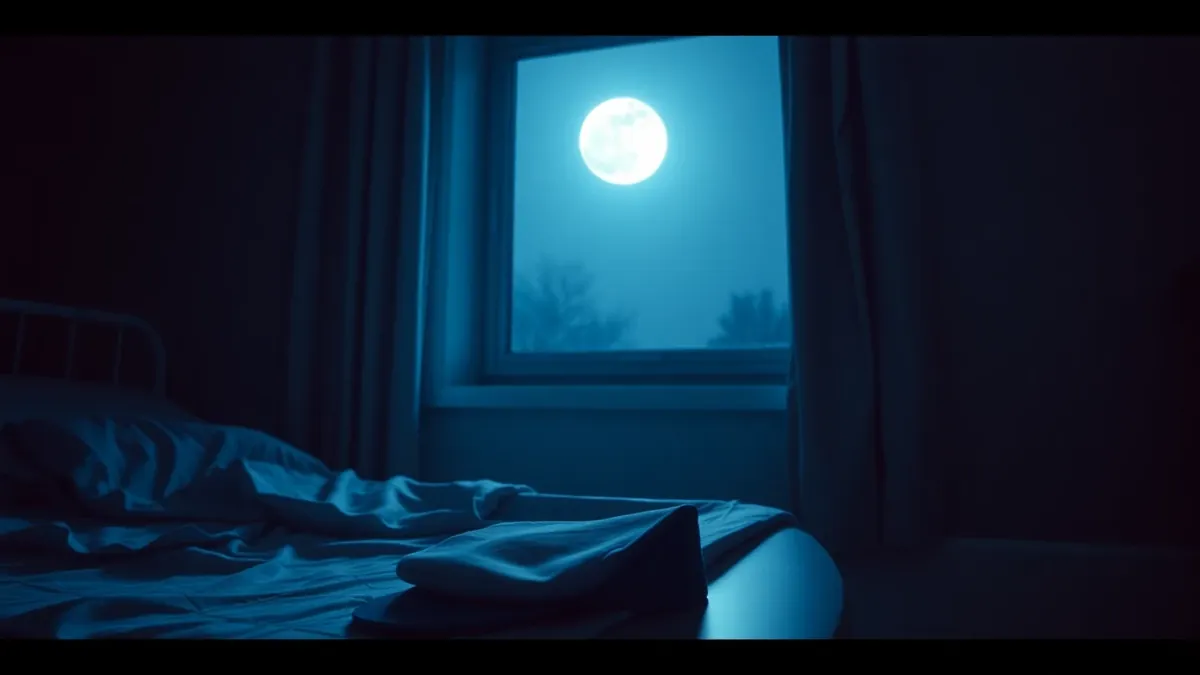
When he left, I went about forcing Magda’s day clothes onto her rigid body. When that was done, the girl and I sat together, staring out the same window into the wind and icy rain—the only sound that ever drowned out the mother’s constant wailing.
The window was not the only thing to look at in that room. Behind Magda’s back, as if she were purposely avoiding it, was a portrait of her family, presumably painted when Magda was healthy, before any of these horrors. When I first saw the portrait, I wondered how such a happy family could have come to this end, but as my life with them continued, I began to see the portrait for what it actually was. The father was much thinner and with fuller hair, holding the mother’s hand as if he wouldn’t let her out of his sight. Although he wasn’t smiling, there was a look in his eye like he had the world just where he wanted it. The mother was one of the most gorgeous women I had ever seen, and when I gazed at her, it seemed like she was looking out from the painting and admiring her reflection in my eyes. Her blonde hair flowed past her shoulders, and she wore a shimmering green dress, embroidered with lace, her red lips curved into a smile—and then there was Magda, raven-haired and just as beautiful, her face unmarred.
Whatever had caused her jagged scar hadn't happened yet. Or perhaps the painter had decided to leave it out. But whatever he had done to paint over reality, he hadn't succeeded in making her forced smile look real or in blotting out the sadness in her eyes.
Some months passed before strange things started happening. One morning, when I came in to feed Magda her breakfast, there was a key sitting directly in front of her on the table, and even though her head was still angled to the window, it seemed to me, though I chalked it up to my imagination, that her chin was pointed down at the key, as if to bring it to my attention. Well, I couldn’t think about it long, because I almost immediately noticed that Magda had wet herself, which, as you might imagine, distracted me from anything else. In my rush to clean her, I simply slipped the key into my pocket. I assumed the father must have left it there on one of his rare visits to the room, and I completely forgot about the entire incident.
A week went by as usual, but then one morning, I went into the room, and sitting in front of Magda was a small wax figurine of a ballerina. I picked it up with the tips of my fingers. I’d never seen a wax figure before that I didn’t find garish and terrible, but this one was different. The body was long and graceful, and if I hadn’t been touching it, I would have truly believed that the tutu was made of the finest silk, rather than wax. It draped across the body with—what do they call it? Artful artlessness, I suppose. The light brown hair seemed to be in motion, a few strands loose from the exertion of dancing. As I balanced the figure in my palm, it seemed almost to turn in a graceful pirouette, but I knew that must have been an illusion. I touched her temple as if brushing a strand behind her ear, and was brought back to reality when my fingers touched the waxy surface. I looked into Magda's sad, unmoving eyes.
Was her expression slightly different than before? It seemed so, but I felt I couldn't trust my own impressions of things. On a whim, I reached out and touched the ugly white scar that ran above her eyebrow. The warmth of Magda's skin surprised me.
I didn't know what to think of the ballerina. It didn't seem like something the father would have anything to do with—perhaps the mother had put it there, maybe during the night? My hypothesis was all but confirmed the next morning when I came into Magda’s room, and there was somebody already there attending to her. I held back a little gasp of surprise. The woman was dressed in a very fashionable royal blue sleeveless dress that fit her body very snugly and stopped just above her knees. Around her neck hung a gold chain with a medallion the color of peacock feathers. Her long blonde hair was brushed back into an elegant braided bun.
I would never have recognized her if it weren’t for the portrait that hung above. The mother, just as beautiful as the old days, the lines of grief on her face barely perceptible through her bright smile. I wasn’t aware that she had lucid days, but it happens sometimes, even to the most severely disturbed.
"Oh, Magda. You silly girl," she said as she spoon-fed Magda a bowl of soup. Her soft voice was somewhat babying, but soothing. Of course, she had no experience in caretaking and the soup dribbled down her daughter's lips and onto the white dress she had been changed into. The mother's eyes didn't seem to see the mess she was making.
Despite her motherly incompetence, I felt a rush of gratitude towards her that I can’t quite explain. Maybe I was just grateful to see the mother finally acting like a mother, or at least doing her best.
She seemed to catch sight of me in the corner of her eye, and spun around, dropping the spoon.
"Oh dear! You frightened me," she clutched at her chest, ever the performer.
"Good morning. It’s nice to see you awake."
"Oh, well, you know, I always try to keep busy. Oh how rude of me. You must be one of Magda’s friends. I’m her mother. Call me Matilde."
I frowned, and the mother turned back to Magda.
"I know it’s hard to watch," the mother continued, "but she always gets this way when she’s ill. She just completely shuts off. The doctor says it’s really nothing more than the flu that’s going around, and she should be up and about in less than a week." She smiled up at me, her eyes sparkling.
After a moment of hesitation, I nodded, "Yes... that’s what I've heard." The mother's smile dropped, "I certainly hope we're not the center of gossip!"
We lapsed into silence, and I watched her hopeless ministrations until the quiet became unbearable and I offered, "It’s nice to see you take care of her."
Her eyes widened, "She’s my daughter."
"I know," I said. But the mother didn't respond, as if she had stopped hearing.
When the bowl was empty, she stood up, "Good girl, Magda. You’ve finished all your soup." The truth was that there was more of it on Magda's dress than in her stomach. When the mother left, I trailed her out and into the kitchen.
"You know," I said, remembering the figure from yesterday as I watched her wash the small pile of dishes in the sink, "I saw the little ballerina you left out for Magda. I think it's very nice. Something to help her remember."
The pan she was washing clattered against the porcelain sink. Her hands hovered in the air, her back went rigid like a frightened cat's. She turned towards me.
"What ballerina?"
The words caught in my throat, "Oh. Never mind. It was--it was nothing."
"Where did you find it? Show me."
"Oh no, I must have been mistaken." I took a step and found that without thinking I had blocked the door to Magda’s room.
But the focus had gone out of her eyes. She rushed past me into Magda’s room. I was stunned for a moment, and by the time I could follow her, she had slapped her daughter twice across the face.
"Come back!" she shrieked, and pulled at her daughter's hair. "When will you come back? You stubborn monster. You--you---"...
I closed my eyes as her screaming washed over me, as if I were the object of her wrath.
When I opened my eyes the mother was shaking Magda. I shook my head. I don't know why, but it was like she was shaking me, my brain crashing against the sides of my skull.
"Stop!” I said. "No!" Or at least that's what I think I said.
My words, or perhaps her own exhaustion, eventually stopped her. She staggered back and fell limp against me. I looked down at her body. She looked so small, but it took all of my strength to usher her limp-weightiness up the stairs and into her bedroom. When I pulled open the door, she wandered back to her rags and violin. Before I had even made it downstairs the haunting music and wailing had started up again.
It was with the thought of this strange ballerina figurine that I returned to the room. But when I searched the shelf upon which I had left the figurine, I found that it had disappeared. I searched the other shelves around the room. Then, as I was dusting my hand across a shelf that was nearly out of my reach, my foot hit something. I looked down and saw that it was the edge of the carpet and that there was a small lump beneath it. Crouching to my hands and knees, I lifted the edges of the rug and found the little figurine hidden there. But there was something else under the carpet. As I peeled the rug further back, I saw that it was the outline of a trapdoor.
As if in a trance, I reached into my pocket and felt for the little key that I had found by Magda’s hand days ago. I propped the door open and there was a very short ladder leading down into the darkness. I lay down flat on my stomach and gripped the edges. I leaned in, peering into the darkness. All I could see were shadows, and I thought if I stared long enough my eyes may adjust. Then, somewhere in the darkness, there was a creaking sound and footsteps—my stomached lurched. But when I stilled my body and listened carefully, I realized the sound was coming from somewhere else in the house. It must have been the father coming home for his dinner break. I scrambled to my feet, pulling the trapdoor closed behind me.
Days passed by and I didn’t have the nerve to take another look in that trapdoor. Then new wax figurines began to appear every morning, always the same ballerina, and always in a slightly different position, like she was performing a very slow dance. This continued for weeks until one day there was no figurine. I looked all around, and finding nothing, I thought this was my sign to venture once again into the trapdoor. For days I’d been carrying around a flashlight, just in case.
Considering this prospect, I turned back to Magda, and I noticed something was a little off in her face. I couldn’t quite place it at first. I had grown so used to her unfailing stillness, but when I drew closer I saw that her long, jagged scar was violently red and seemed to be pulsing against her skin. I stared for a moment into her eyes, which were just as glassy and lifeless as ever. But in the silence of the room, I could now make out a very soft gurgling sound coming from her throat.
With shaking hands, I pried the girl’s jaw open and shone my flashlight inside. Yes, there was something there, lodged in the back of her throat. I ran to the kitchen and grabbed a spoon from the countertop. I shoved it down her throat as far as I could reach, and she began to gag. Finally, she choked up an object into my waiting hand. Without even so much as wiping her spit away, I held the object into the harsh light.
It was one of the wax figurines. Its slender arms and legs distorted by having been lodged in Magda’s throat. I stared at it, and when I looked back to Magda, her eyes were as placid as ever.
Determination drove the fear from my mind. With one last backwards glance at Magda, I pulled up the edge of the carpet and yanked up the trapdoor. Holding the flashlight in my mouth, I gripped the edges of the short ladder and worked my way down. I planted my feet on the floor, which was soft, like it was coated in dirt, and I looked around. I could barely make out an object in the depths of the room covered by a long white sheet. As I stared, it seemed to move towards me, but maybe that was just the shadows playing a little trick on me. Shining my light above me, I noticed a string for a light bulb, which was just out of my grasp. On my tiptoes I reached up, and my fingers barely touched the string, but not enough to get any sort of grip.
My trembling hands shook my flashlight's beam, conjuring more dancing shadows. I continued forward, toward the sheet-covered object, and soon—too soon—I reached it. There I stood, quivering as my arm reached out. When my fingers touched the cool fabric, a wave of fear crashed over me. I turned away, forcing myself to breathe slowly, unsure why exactly I had lost my nerve. I glanced behind my shoulder, back at the sheet, and out of the corner of my eye, I could see a black polished shoe peeking out from under the sheet. It looked just like one of Magda’s shoes. Without a second thought, I squeezed my eyes closed, then ran blindly to the edge of the room and clambered up the ladder. I couldn’t look. I simply couldn’t look. Somehow, even then, I knew exactly what I'd seen. But as soon as I was out of the room, the rational side of my brain took over. Storage, I thought. What else could it have been? No. No. It was only storage. I told myself again and again.
The next day, it was too late. That morning I went into Magda’s room, and I immediately felt that something was wrong. Everything about her was the same—her rigidity, her long scar, her lips. But something about her eyes seemed different. I stared at her for a moment, but couldn’t quite put my finger on it. I went to the kitchen to make her breakfast. Oatmeal with a little baby food, just like always. Sitting back down by her side, I reached up to pry her jaw open. That’s when I felt it. Something was wrong with her skin. It was hard and slick. I scraped at with my fingernail, just under her jaw where no one would notice. The skin came away in flakey curls. I jumped back and stared at her for a long while. But when I touched her again, I let my fingertips slide against her cheek. There was no way I could deny it any longer. She was made of wax!
What more can I say? In an instant it became clear to me that she had made the figurines, that she must have plotted her escape for some time. Yes, the daughter had vanished, although the replacement she left behind was hardly different. That was the end of my job there. I considered not telling the parents. I could have gotten away with it, I was sure. But what would have been the point? When I told them, the mother just sat and stared ahead, humming her little dirge, and the father choked several times, his eyes bulging out and then squinting, like he was doing everything he could not to cry in front of me. When I had finished my story, he stood up and marched away to make a series of phone calls. I thought they might try to punish me for my carelessness, but I was quickly forgotten. I crept out that evening, leaving the keys in a plastic houseplant by the door.
That was the end of my story to the man on the train. My listener was attentive. He asked me nothing, just as I had hoped. We passed the rest of the night in silence. The next morning, I woke up early, well before my companion. I thought about sneaking off, but the slowly unfurling light seemed to hold me there. When he awoke, I was preparing to leave, rolling up my night-clothes into my suitcase as the train slowed toward its final stop.
When I heard him come down from the upper bunk, I turned toward him. He seemed surprised to see me. In the light of day, his look lingered on the crown of my hair, where I knew the dark roots were growing out from underneath the blonde. His eyes fell on the heavy coats of makeup covering the scar over my left eyebrow. I turned away from him before he could decide what he was seeing.
I realized then that it had been a bad idea for me to stay, but before I could leave, he spoke, "And what will they do with the wax figure, do you think?" he asked—it was his first and only question.
I hesitated before answering, "Well, it certainly wasn’t made for them, and who would want such a thing anyway? Knowing them, they’d probably like to have a funeral, but they can’t really, can they?"
As I left the compartment, I looked back and smiled, "I’m sure they’ll keep it for a while. It’s not much different than the real thing. But in the end, I guess it’ll be thrown away, along with her clothes and shoes and books.”
Very truly yours, with more love than you can imagine…

“The Girl Made from Wax” was printed in Tracks, No. 9 of Inwood Indiana. Pick up the paperback from Prolific Press; the stories and poems published online are free to read here.
Get the paperback