I remember my smoke-filled lungs, my blood-smeared shirt, my shattered right arm. The jets that roared over the slums sounding like the end of the world. The tear-stained face of a small girl pressed tight against her dead mother. The lifeless bodies piled one atop the other on the debris. My father—clutching the RPG, pointing it up at the sky, screaming God is great, God is great! Then the sound. That one horrible, loud, grating sound that changed everything. His body, exploding from the inside out. The way his eyes went wide right before, the way he looked at me… Panic sticks in my throat like a knife. I gasp, flail my arms. I can’t breathe. I’m going to die, I think. I’m going to die right now.
My eyes open to darkness.
“Shh,” mother says from the side of the bed, stroking my dark hair. “Quiet, Asad. No more crying. Everything will be okay. Go back to sleep.”
The Arabic sounds beautiful with its truth but that doesn’t erase the horrible image.
“I can’t, mama. I keep seeing him.” The tears come fast; as usual, I am powerless to stop them. Sobs shake my entire body.
A strange thing happens: the moonlight streaming through the open window highlights a tear on mother’s cheek. She almost never cries. Then the droplet falls to the ground and as soon as it has been there it is gone.
She lays a hand on my brow. “My sweet boy,” she whispers. Her breath is soft and warm against my ear. “My sweet, sweet boy. I’m so sorry I cannot give you better.” And then she kisses my cheek and cries against my small shoulder for the first time since father died.
She cries for a long time, and I let her. She has kept it all within her secret heart for too long, but now she is letting it out, and that is okay. That is alright. Then mother gets up to leave, eyes open and glistening with new water in the waning moonlight.
Sleep does not come.
Years pass and father’s death fades into time.
“Asad!”
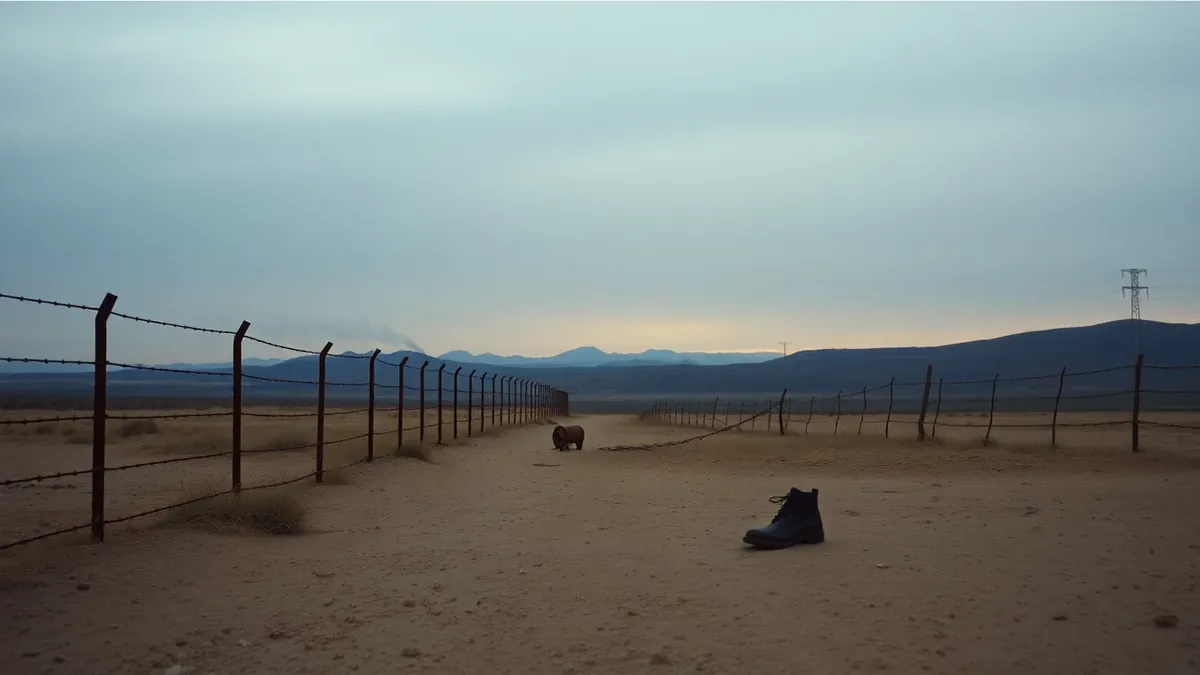
I turn. It is Saad. A smile has enveloped his entire face and his wide dark eyes twinkle in the night. For a while we stand next to the fence smoking cigarettes. Through the tight links I can see the soldiers on the other side motioning to one another, staring at us with narrow eyes. But we are not terrorists. Tonight we are only teenagers.
“Come,” says Saad. “They are waiting.” His grin grows wider.
They are waiting. A smile flashes across my face then, too. I zip up my coat and run with him along the fence towards the girls, who are sitting atop a pickup truck drinking American beer, laughing. They have taken off their burqas. The white starlight gleams against the makeup smeared on their faces.
We jump into the truck’s bed. I can feel my heart beating hard and fast in my chest. Tonight is the night, I think. For a moment a fleeting image of mother comes to mind. I shiver and cast the thought away; she is not here.
One of the girls drunkenly lays a hand against my chest. For a moment I think of lifting it away, but then she brushes my face with a trailing finger and a thousand small fires erupt all over my body. It is invigorating, magical, better than anything I’ve ever felt before. I smile as her soft warm lips brush mine.
But then I see father. I see him and hear the horrible grating sound that has haunted me forever and will never leave. Warm shame colors my cheeks. I zip up my coat and run faster than I’ve ever run before.
“Asad!” Saad screams, his voice high and mad with frustration. “Asad, what are you doing? Where are you going?”
The girl I was with sighs, but I don’t care. I cannot disappoint father and I must watch over mother. It is very simple. If anything happened to her the shame would be too great. Saad and the girls say something else but it is not audible over my harsh breathing and the sound of my heart pounding against my ribs like an animal trying to escape its cage.
When I return the house is quiet. I lock the door and pace quietly into the room where mother sleeps. I can hear her soft breathing, and in the dark I can make out the outline of her chest moving up and down with each inhalation. She looks so alone in the bed, so lonely and fragile and desperate, but nothing can be done about it. Sighing, I crawl into my own bed and stare silently at the ceiling fan as it spins in its endless circles.
As the fan’s hum lulls me to sleep, I weep.
More years pass. Saad is sitting in my room. He has brought something with him, hidden within the sack at his side.
“This will give us some…some adventure,” he says, and laughs.
“What is it?” I ask. “Show me.”
“Is your mother home?” he whispers.
“No.”
“Well then,” he says, his eyes bright. “Give me a second and I’ll show you.”
He winks, then reaches a dirty hand into the sack and hauls out something long and rounded and slender. Something unnatural. The effort he put into yanking the weapon out sends three grenades rolling out of the bag and into the corners of my room. My heart leaps into my throat.
“Get that out!” I scream. “Get that out!” I grab him by the shoulders and shake him. “Now!”
“What’s wrong? Are you insane?”
He says more but I don’t hear him. I just remember what happened to father and how horrible it all is and push him away.
“No, I am not insane. You are. Now leave—and leave this here with me. Don’t you dare take it with you.”
“It’s mine.”
My best friend grabs the shaft but I push him down and kick him hard. He is flailing on the ground like a fish out of water. Blood seeps down his cheek, but I don’t care. It is only a drop compared to how much will flow if he goes through with his horrible plan. The desperate thought comes: I must keep this from happening.
I grab the RPG and run towards the window. Maybe I can throw it out, I think. Maybe I can ruin it. Sunlight streams into the room, reflecting against the metallic shaft with such intensity that it nearly blinds me. My senses are at their peak; I can see each particle of dust, feel every bead of sweat crawling across my skin. Almost there. Saad’s hands claw at my ankle and I fall uselessly to the floor. No, I think. No. The weapon clangs against the wall.
“Thank God,” Saad says. “Mahmoud will kill me if something happens to this.” He paces towards the horrible thing.
“Give it to me!” I scream. “Don’t use this.” I lower my voice. “Don’t do it. It will destroy you. It will separate you from God. Don’t you see? There is nothing for you on that path. This conflict will continue and I know it’s unfair but you just have to accept it, Saad. Please don’t do this. Please don’t throw your life away. This is not coming from an enemy; this is coming from your best friend. Please. Do not exchange your reason for your anger, your peace for madness.”
Saad doesn’t listen. “Asad,” he says slowly, rising from the floor, picking up the grenades and the launcher, “we are not friends anymore.” His eyes are red from anger and his hands are shaking violently. “It seems that we never were.”
That night the moonlight flows freely into my room, and even the thick blinds cannot keep it out. The light, in combination with the sharp anxiety that has haunted me since father’s death, makes it even harder to sleep than usual. I sigh. The low murmur of gunfire resounds in the distance. The group of fools Saad joined must have crossed the fence.
Perhaps, I think, perhaps I have convinced him, though.
But then I hear the loud bang of an RPG, and then the sound I heard all those years ago— that horrible, grating, machine-like noise that cries out against all things human. And even though I try to push the thought away, in my secret heart I know what has happened. Saad is dead. He is as dead as father—and he died in the same way. Maybe he killed someone.
Years ago, the thought would have lent me comfort; but I have grown. I know now that there are young men just like me across that fence. There are people like Saad, of course—there always are; but there are people like me, too. There are other boys who have been forced to grow up all too soon.
That night, the cause of the sixty-year old conflict comes to me and it seems simpler than ever before: People do not understand, I think. They do not understand the pain that their hatred brings. Then I clutch myself, curl into a ball, and as I stare up at the ceiling fan—turning, turning, turning, always turning, spinning in the same endless way that it spun on the night of father’s death—I weep.

“The Fence” was printed in Harvest Time, No. 5 of Inwood Indiana. Pick up the paperback from Prolific Press; the stories and poems published online are free to read here.
Get the paperback