The smell of the Diamondland Zoo haunts Mishka—in his sleep, while he is walking in the woods, on the train. He tries to escape the pull, but there is no logic when it comes to that part of his brain. He is driven to return to the zoo in cycles, like the tide. He goes there to feel the less human parts of his soul. He stalks there. He prowls. He growls and snarls and drools and eats warm flesh. The smell of urine from the different species blends together into an aromatic porridge. He can’t keep his mind off porridge, or honey, or salmon. He thinks like this, dreams like this, in a sort of stupid poetry. Mishka may be as dumb as, well, a teddy bear, but he can kill. He can’t add, but he can tear a man’s head off. His other self, Wesley Hunter, is not there anymore. Hasn’t been for a long, long time. Mishka has injected himself with so much anabolic steroid, so much Bighead juice, that his human self is nothing more than a faint memory of cigarette smoke and Jazz.
Mishka has killed so many times that it is no longer enjoyable. At first he loved killing. It made him feel less human and that was good. But with being less human comes a lack of joy at taking another human’s life. There is just necessity, and he performs his trick over and over again. Mishka doesn’t hate killing. It’s just something he does. It’s his job. He gets paid for it. He vaguely remembers Wesley Hunter: a whiff of after-shave, the turtleneck sweaters that scratched his neck. But this evening marks the last time he will remember who he was. Tomorrow is the first day of the rest of his life as a bear.
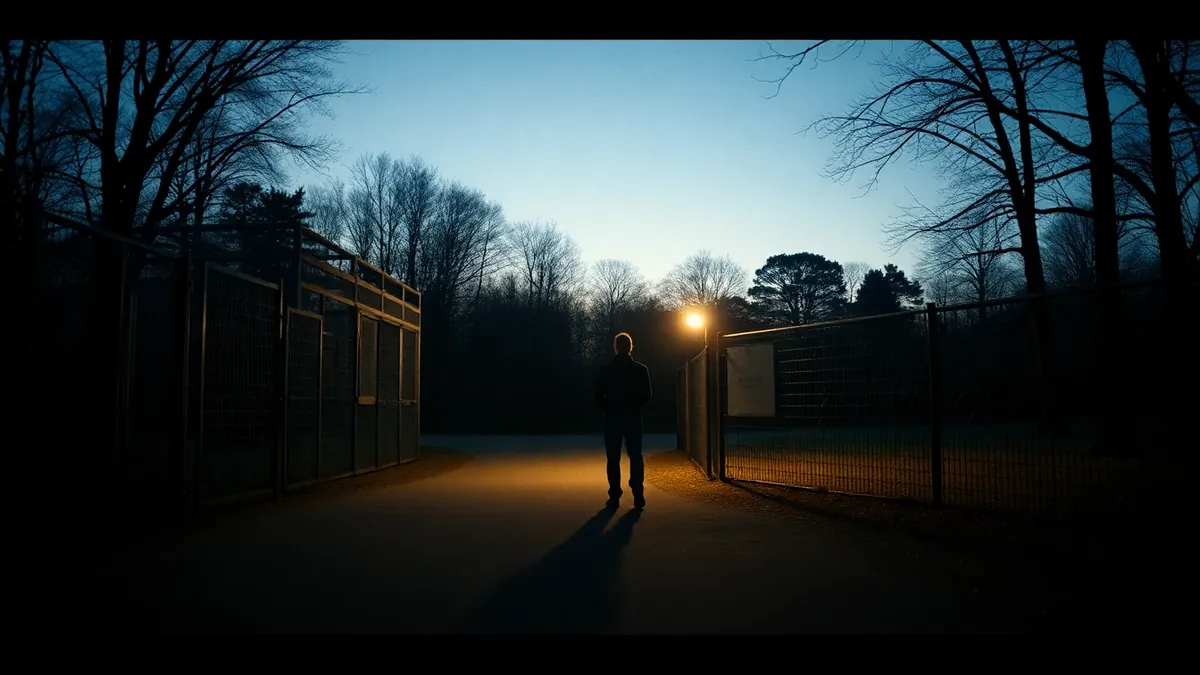
The zoo is closed for the evening. Mishka has scaled the high brick wall that separates the animal park from the city. The moon is out, the full Harvest Moon. The reddish glow illuminates the other animals in the zoo. They are restless and call out when Mishka runs past them. He is all too familiar with the wide assortment of cages and displays. Each animal he knows, knows the soul of the creature. They call to him as their leader, the only one among them who has experienced both freedom and necessity. Past the Egyptian pyramid enclosure with the camels, on to Parrots’ Lane, Goat Rock, the European Birds of Song, through the Japanese Tranquility Garden, the African Savanna—even the lions treat Mishka as the king of kings. He arrives at the Wolf House, pauses to catch his breath, and then moves on all fours past a birdhouse known as The Ravens’ Castle and the Children’s Farm, with its old heirloom breeds. These animals know Mishka from the dark times, when humans first domesticated beasts. They know him from the deep forest. And they fear him.
Mishka arrives at the small café that sits next to the Small Mammal House. His chest cavity is filled with an intense throbbing. His lunch burns his stomach. His flesh feels like worms are crawling beneath it. No. Not worms. Cockroaches. Too much adrenaline.
Mishka can’t sit still. He’s been injecting himself too often with the serum he stole from The Farm. The café seems deserted at first, and then he sees her, sitting at a table in the moonlight. It’s a woman he knows but doesn’t know. A woman who rests at the bottom of a deep well, incognito, calling him. He doesn’t remember her. But she knows him. She is not frightened by Mishka, which confuses him. She seems disappointed that he has shown up, instead of someone else, but she approaches him like a lover. This startles the bear. She whispers his name, his other name: Wesley. A werewolf will return to its human form if it is called by its real name. But this does not work with Mishka the Bear. He is too strong. She almost fooled him, but not this time.
He cuts her neck quickly, too quickly for her to react. Her head flies off her neck and hits one of the café chairs.
Mishka picks the head up by the hair and runs with it to The Ravens’ Castle. He climbs the castle stairs and places the head atop one of the towers. He then returns to the body. His heart feels like it is going to explode. He tosses the headless body over his shoulder. He carries it with him into the night. Mishka is no longer an undercover agent.
He has gone rogue. He’s got no strings to hold him down. They have been cut. Mishka is staying at a fur importer’s warehouse at the edge of Diamondland. He carries the body up the stairs and into his den. He devours the woman’s flesh. He is very hungry. He cracks the bones and sucks the marrow. In some ways, he feels that this body belongs to him anyway. It is as if by being eaten she is returning home. This act is brutal and fierce. There is no joy to it. Just hunger. And breath. And saliva. He is about to chew on the woman’s left arm when Mishka notices a gold wedding band on her index finger. This sparks one of those distant memories. He may have known this woman at one time. In that other life. He is about to remove the ring, thinks about it, and then devours the hand without taking the band off. It will be disposed of properly. In the woods. Later.
When the moon is not so bright.
The woman who Mishka the Bear has killed and cannibalized was, of course, “Carlotta,” one of the undercover aliases of Diane Hunter. Did Mishka, in decapitating “Carlotta” also decapitate Diane? Or had she bifurcated and become two, possibly four, separate people? Did Mishka act under his own power—has he crossed the imaginary line that separates assassin from serial killer—or was Mishka programmed to kill “Carlotta” by Control or even The Shadow Farm? Did he have a motive, a human motive like revenge, or were his motives simply animalistic? Hunger. Fear. Necessity.
Mishka the Bear dreams human dreams that night, hibernating deep inside a large bundle of furs in the warehouse, his stomach full and digesting. He dreams of a woman; her head appears as a refrigerator with a combination lock chained to the door handle.
What is inside the head that he cannot get to? Mishka dreams of Doctor Josef Mengele, who gives him a Christmas present. Mishka wants to open the present, but has to leave it under the tree because there is a bus to catch. But a bus to where? He dreams of saliva and hair. He dreams of The Farm, the smell of the cages where he was kept and studied by the men in the white coats after a night on the prowl. That farm smell is an even more powerful smell than the zoo. It calls him home. In Mishka’s hibernation, the chamber at the fur importer’s warehouse transforms into a manmade cave, inside a manmade mountain, in a bear cage at a zoo. Mishka has returned home with the body of the woman he once loved.
The next morning Wesley Hunter wakes up on a park bench in Amsterdam. He is far away from home and cold. He doesn’t remember much of the night before. His head hurts, like he is hung over. He has blood on his hands. He vaguely remembers the zoo and killing a woman. But he doesn’t know if it was a dream. He has been wandering back and forth across the void, entering and leaving Diamondland frequently and with no apparent motive or pattern. He is lost. Lost without Diane and lost without Lola and his other children. He can no longer grasp the meaning of his life as a Hunter. He knows Mishka. But Wesley has slipped through his fingers when he wasn’t looking, when he was too busy being other people for those who didn’t care about what happened to him.
This truth is difficult for Wesley to swallow. He has fallen into a deep well of loneliness where he is tortured in ways that only he knows how. Like Wesley, I too carried the burden of undefined loss, a vague sensation that I was missing something from my past—a memory, a name, a smell—and that if I only followed the trail left for me and solved the mystery, I would be given or given back the missing piece to my life.
“Sanction” was printed in Salem Cemetery, No. 6 of Inwood Indiana. Pick up the paperback from Prolific Press; the stories and poems published online are free to read here.
Get the paperback