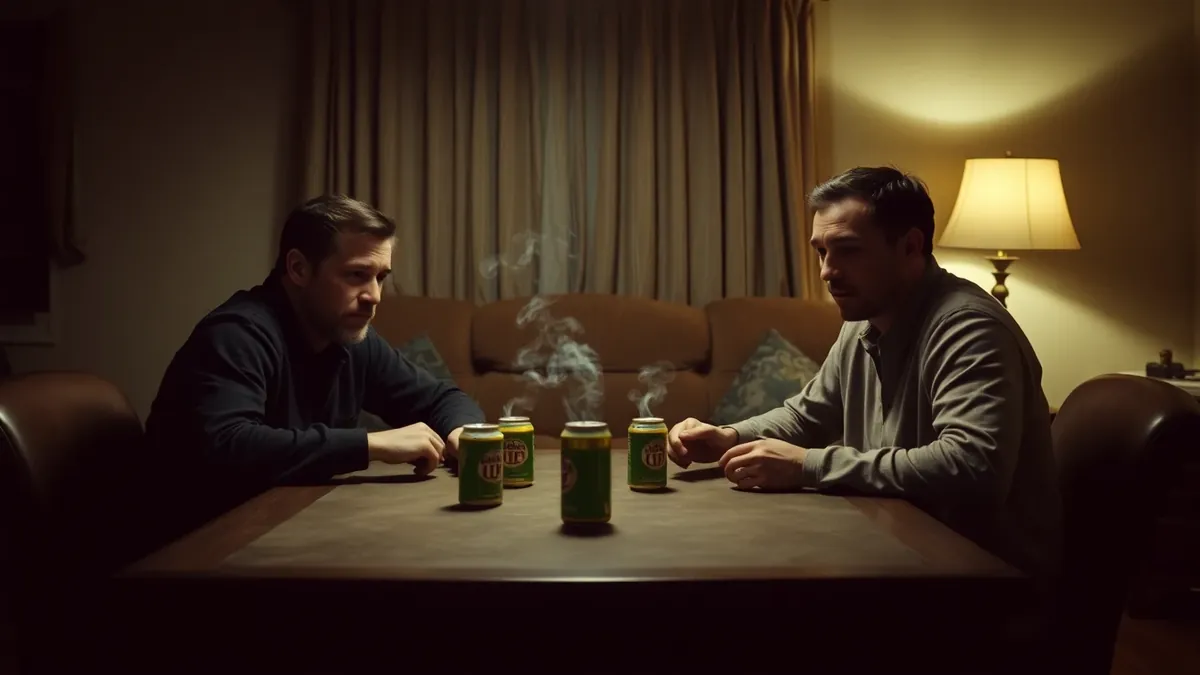
As my brother nears forty, the smoke from his cigarettes seeps into our couch, and when we play poker Monday nights he snaps open beer after beer and tells sloppy jokes more loud than funny. He has never married, and his last relationship was a horror show. Recliners were burned in the driveway; clocks thrown through windows. He has always been just off the edge of life, and when I trace it back to the beginning, my Aunt Helen is there, tucked into the landscape like a dogwood in bloom. In a Polaroid she poses by the lake at Yellow Banks, a campground in the boot tip of Indiana. The picture is old, everything shading yellow. She holds two large catfish, one in each hand, their bellies creamy as butter, little round eyes above strange oriental whiskers. They struggled to breathe long after she pulled them from the water.
That whole summer my brother was her puppy. When we camped at the lake and my mother sent us to bed, Helen, all of nineteen, would linger in the tent, stroke my brother’s fine hair and tell these fractured when-I-was-a-little-girl stories until he fell asleep. Funny stories about fat uncles lurching toward her down the narrow hall. How her mother would throw empty bottles at a growling dog, shattered fireworks of twinkling glass. Blonde strands of hair fell across her face so I couldn’t see her eyes.
In another old photograph she’s curled in my uncle’s lap, the lawn chair beneath them ready to collapse. My uncle’s eyes are bright and he flashes big square teeth beneath a ragged mustache. The stub of a cigarette smolders in the hand he rests on her thigh, and in his other hand he holds a can of beer out for the camera like a husky pitchman. The campfire is a dash of blurry sparks, but nothing framed has gone to yellow.
After swimming all afternoon, the whole family returned for an early supper, pink-skinned, tummies full of lake water. The Coleman stove hissed blue flames. In the reeds near the wooden dock we found a painted turtle the size of a half dollar, a slider my uncle called it. We put it in a Styrofoam bait cup and scooped up some swampy water. Aunt Helen lifted it high between two fingers, and it pulled deep inside its shell and sealed up tight. My brother cried that he wanted to see it, so my aunt pulled a Zippo from her front pocket and let it flicker beneath the turtle’s hinged belly. The small thing ran on air, mouth agape. A shiver shimmied up my arms, so I wandered out to the ice chest to fish out a soda. In the last of the day’s heat we watched snakes ess through the shallows. Near dusk a family of fat people came down to our neighbor’s dock and tried to rock free the wooden pilings for firewood. When we yelled at them, they ignored us and my grandfather had to warn them away with his revolver.
In the fall my uncle and aunt split up and she moved in with the second shift manager of the McDonalds in Boonville. Our mother fielded calls from friends and nosy women from the Methodist church who swapped all the gossip of how things turned ugly. On the way home from the county dump one afternoon, my father swung by to check on my uncle. As our truck knocked to a stop on the curved curb of the cul-de-sac, my uncle killed the mower and broke into tears at the end of the drive. He mopped his eyes and neck with a bright red bandana. His teeth were hidden behind his glistening mustache. A little dead tree in the yard clung to the last of its orange-brown leaves.
Someone had poisoned Tippy, their dog. I raced around back to get a look, my brother on my heels. He tripped on the downspout of the gutter and sprawled, but scrambled to his feet and followed. The dog settled deep in the gloom of its house, still chained to a stake, mouth open and black, riddled with flies. Its body fell in on itself and the stench was putrid and heavy. My brother couldn’t put the patterns together in his head, light and shadow mixing with decay. He kept asking, Where’s the doggy? My father came up and yanked us away by our elbows.
Our home was strangely quiet. The television had gone out and a thin guy in a green pant suit came over from McGowan’s and pulled its guts out. My mother brought him a glass of sweet tea and half a sandwich. My brother and I sat on the couch and watched the repairman work. My father threw his tools around on the unfinished side of the basement. When the man finished up, he gave my mother the bill and thanked her for the sandwich.
He was barely out the screen door when my father came in fuming. He asked her what she meant by flirting like that? She said my father was being ridiculous. We chewed and chewed our sandwiches as the whole thing wound tight like a swing and spun all loosy goosy.
My brother burned twigs behind the garage and freed the Lautner’s rabbits from their old shingled hutch. They never caught the black and white one though we saw it for weeks at the fringes of the neighborhood. When my parents grounded him for acting out, I helped him runaway one blustery Saturday. He packed his comic books and some cookies and slices of cheese in a paper grocery sack and I boosted him out of the window and closed and latched the shutters. Mother came looking for him when it got too quiet, and as usual, his timing was impeccable. He had second thoughts and knocked on the window as she looked in the closet where she thought he might be hiding. After work my father gave us both the belt.
One Sunday after church my brother dug my aunt’s new phone number from my mother’s purse. The light was thin and pale and the parking lots of the shopping malls still held the last mounds of soiled snow. Mom was in the basement sorting laundry and checking pockets, and my dad snoozed in the recliner as the football game mummered on in the background. My brother shrugged his coat on over his Sunday best and slipped out the side door. He walked along the ditch four busy blocks to Shelpper’s gas station where he called our aunt from a pay phone. Helen promised to come pick him up, but rang my mother instead. When he saw our maroon station wagon bump into the parking lot, he loped past the propane tanks before my mother snagged him as he climbed the chain link fence. I crouched low in the back seat as people gawked, and she forced him in beside me. His face was wet and rubbery. His army jacket smelled of fried potatoes and greasy chicken, with just a hint of gasoline. He was swallowed by the jacket’s puffy greenness. The sun burned through the car’s dingy windows, warm and steady. He pummeled the back of the passenger seat with his Buster Browns, and for some strange reason I thought again of the turtle. The ditches were weed-choked and confettied with trash, and no matter how hard my mother twisted the dial, all she could tune in on the radio was the faraway tremolo of an old man’s hellfire sermon. My brother rolled down the window and yelled wild silliness to the world. My mother pulled off on the soft shoulder and flung open the door. She peppered him with a flurry of open palms, the flash of fingernails and her wedding ring.
Just last year Helen died of lupus. She’d moved away long ago to Fort Wayne, Indiana and never spoke to my brother again. He jumps from odd job to odd job, replacing a window here, taking down the eyesore of an old chain link fence there. My mother and father have run away to the gulf shores of Mississippi. My mother plays the slots in the big casinos. My father bought a bag of golf clubs at a local yard sale. They bicker and smoke and cat nap between meals.
My brother has stopped fighting with my mother, and she in turn has given up on chasing after him. He never goes far, and sometimes in winter when he strolls up the sidewalk in the dark, poker chips stacked on the table behind me, I swear he’s grown smaller still, a six pack of beer in the grocery sack instead of comics, and that dark green jacket he buys over and over, swallowing him up like the cold rainy weather.
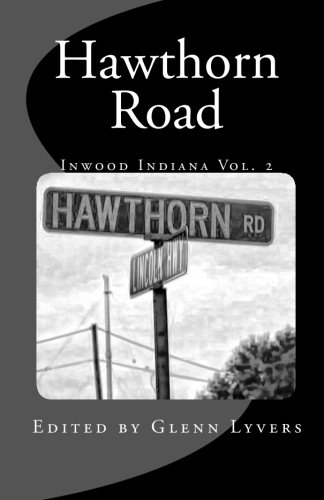
“My Brother’s Keeper” was printed in Hawthorne Road, No. 2 of Inwood Indiana. Pick up the paperback from Prolific Press; the stories and poems published online are free to read here.
Get the paperback