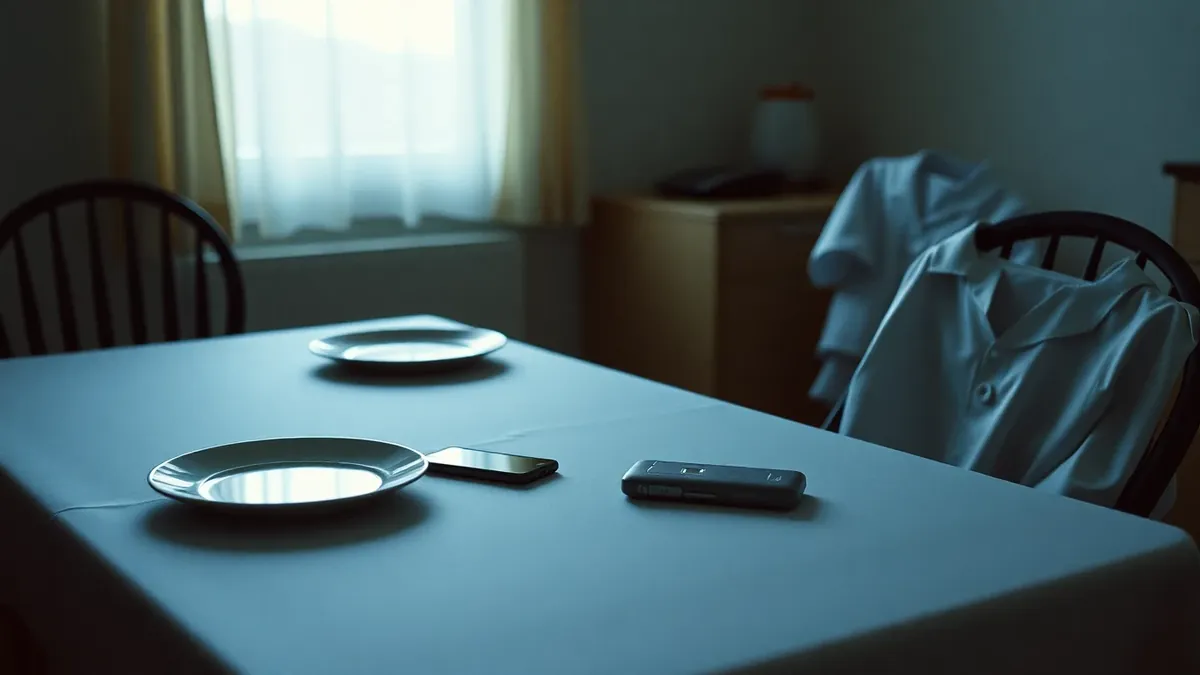
Terry flips open his cellphone and presses ‘speaker.’ Katharine is the fourth caller since Terry and Cheryl sat down to supper.
“Terry,” Katharine asks, “have you heard anything new about Marge?”
Terry sighs. From across the table, Cheryl mouths, “Be nice.”
“Sorry, Kat. I haven’t. Nothing new.”
“It’s so terrible,” Katharine says. “Marge, missing, lost somewhere in the fighting. You don’t think they’d hurt a nurse, do you?”
“Kat, I don’t know. The news says people are freakin’ out over there.”
“That’s right, but you and Marge were always so . . . Cheryl, are you on the line?’
“Yes, Kat. I’m here.”
“Oh, Cheryl. Since Reverend Hisslock put her ‘In Our Prayers’ this morning, the whole town’s worried what’s happened to Marge.”
“We’re worried too, Kat.”
“What are we gonna do with all those donations in the church basement, the clothing and medical supplies? Every year Marge gives us new addresses. Where do we ship this batch?”
Terry shakes his head at Cheryl. Tonight, he can’t deal with a call for prayers; he can’t face his fear that Marge lies murdered, a world away.
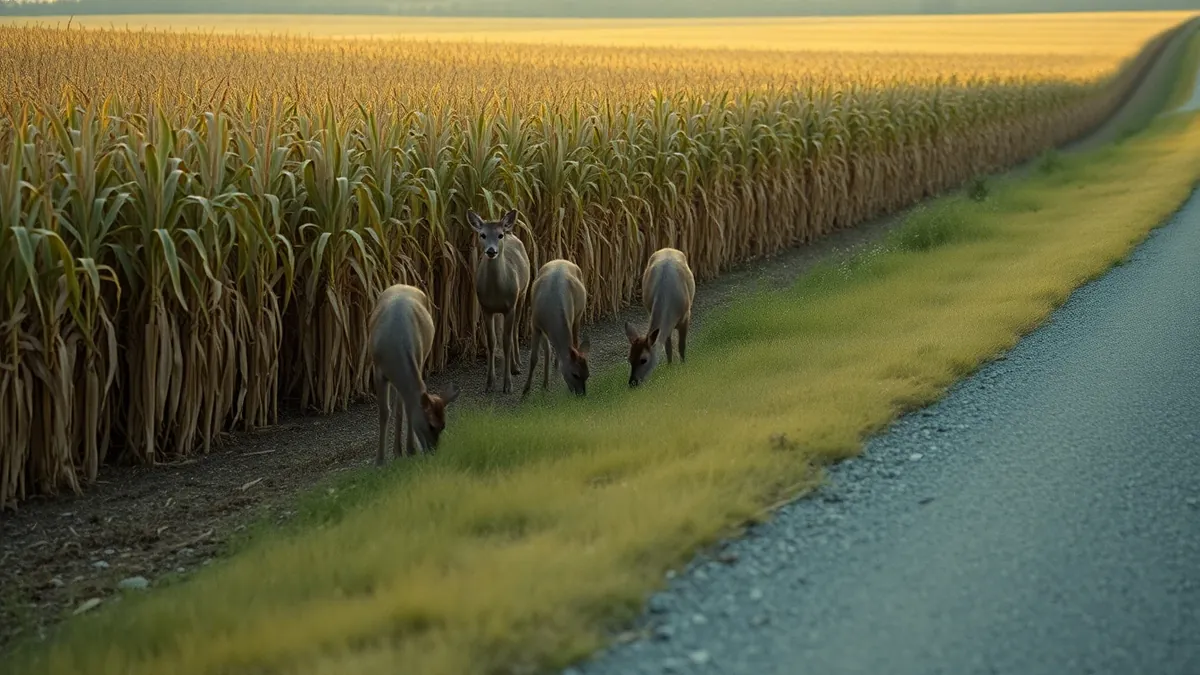
Terry spreads a clean towel on top of the three-bean salad bowl and stalks out onto the front porch. Sun’s going down, fireflies just starting to flicker. Red sky at night, sailors’ delight. He ain’t no sailor, but Terry will take it. Bats swoop from the hay barn, circle the sentry light, and then dive low over his soybean fields. Good God, it’s been nearly fifty years, Terry realizes, fifty damn years and folks still remember, Marge and Terry, Terry and Marge.
He slumps onto the hanging porch swing and looks in the picture window beside him. Cheryl’s there, forearms on the supper table, talking to the air and Kat. Cheryl’s hair is white now, but she’s the same skinny stick of dynamite he married forty-six years ago.
Damn, but he loves her.
Cheryl just bowled him over; he didn’t stand a chance. He knows she did that, but thanks God for it.
Marge and I, Terry remembers, we were farm kids, like everybody round here. Ah, but Marge was smart, not like me. I was Motor Shop and Agriculture. Marge, she was Biology and Chemistry. When we were both sixteen, the 4-H Club got us steers to raise by hand, three hundred fifty pounds of long tongue and fuzzy tail. Mine was a Black Angus; Marge thought that Hereford of hers was a lot cuter.
Those steers grew like weeds, and by August, they were nine hundred easy. County Fair time, us kids led ’em into the judging ring. Moms and dads and meat buyers, all hanging on the rails while we strut them cattle so the livestock judge could see muscle and finish to pick a winner. Maybe a dozen of us, Marge in line just behind me as round and round the sawdust ring we went, pulling our steers along with rope halters. Folks applauded; the high school band played a march, but even with all the noise, I heard her yelp when that Hereford stepped on Marge’s foot, right smack dab on top. I watched her. She was already turning white. She took one limp, then another, then straightened up and shook her blonde hair at me. Her face told me, Terry, don’t you dare come back here. So I stayed put, and we went round one last time and came to a stop.
Everybody held up halters so calves would raise their heads and stretch.
They look pretty that way. Well, Marge did that; all of us did, but Marge was the only one biting her lips—she still didn’t win, and neither did I. We both got Participation Ribbons and we tacked them on our wooden stalls in the 4-H Cattle Barn.
That night, about ten o’clock, when the Ferris wheel and Tilt-a-Whirl were doing land office business, there was a thunderstorm, a real gully-washer. Folks ran for their cars as Marge and I watched from under the Cattle Barn eaves. Rain came down in sheets, waves of it in tower lights, but in a few minutes, it was over. No one was left at the Ring Toss or Milk Bottle games, no one in line at the Dunk Tank, just two little kids beside Spin-A-Wheel, a boy about 7 and his little sister, both wet as half-drowned kittens, looking lost. Marge limped out into the mud to take their hands. I could see the way they looked up at her when she did that.
Marge wrapped them in a blanket and sat them on the bench next to me.
“Want to see something gross?” she asked.
“Yeah!’ the boy said. His little sister wasn’t so sure. Marge pulled off her sneaker and showed us a big red bruise.
“Is it broke?” the boy asked.
“Don’t think so. Look.”
Marge could wiggle her toes some.
She glanced at me and said, “Terry, we’ll wait here.”
“Right. I’ll go find their parents.”
Later, we held hands. That was when I fell in love with Marge.
Senior year in high school, Katharine and Marge decided they’d go downstate to college. Kat went to be a teacher, and she did that; taught Fifth Grade in town for the last so many years. Kat taught our three youngsters, Cheryl’s and mine, and when it was time to teach our grandkids, she did that too.
But Marge wanted to be a nurse, and I thought she’d be a good one.
That summer before college started, Marge and I, we planned it all out.
When I finished helping in my dad’s fields, he’d let us borrow his farm equipment; the mower and rake, wagons and elevator, wheat combine, baler and corn picker. We’d hire ourselves to other farmers, and Marge would use her share to pay college tuition. We’d be a team and save money to buy our own place when Marge finished school.
I remember us baling straw in July. It was hot, dusty work. Marge drove the tractor, pulling the baler, and I stacked straw on the wagon, third in line. Marge could thread twine when it ran out, and grease gears and joints. Back and forth in those fields we went, from morning ‘till sundown. I pulled up bales and stacked ’em eight, nine high on the wagon, ten rows deep, then off we’d go to the barn to unload.
Like I said, it was hot and dusty work, in boiling sun, ‘cause you don’t ever store wet straw or hay inside. Everybody knows that. Marge looked back at me there on the wagon, slinging bales over my head, me shirtless, baking in the sun, sweating. I saw her smile before she stopped the tractor.
“Where’s the water bottle?” she called. I held it up.
“Time for a break. Let’s find some shade.”
I jumped down and went under the wagon ‘cause I knew what she wanted.
Marge got under there with me. We sat cross-legged on wheat stubble, our hair brushing up against the wagon bed. Oh, the way she looked at me! Then she took the thermos, tilted it for a swig, water just pouring out over her chin onto her shirt. She stared at me some more, then began to unbutton that shirt. Her mom thought Marge a scandal, but back then fashion was girls didn’t wear bras, ’cept on Sunday. She lay her shirt on the ground and patted down the stubble underneath.
“Wait a sec,” I said and climbed out from under to get my own shirt.
She was grinning like mad when I got back, real quick.
“Think I’d start without you?” Marge asked as she slipped off her jeans. I put my shirt under her bottom.
Marge, she was fine . . . real fine. I kissed her softly. She always liked that a lot. I was careful not to finish inside her, careful not to spoil things for Marge—for us. Ain’t no song could ever say how much I loved her.
I don’t hardly know how Cheryl Campbell got her hooks in me. In school, Cheryl was just this scraggy little Niner when Marge and I were seniors. Flat as a washboard Cheryl was, I hardly ever noticed her, but she was always hanging round us in the halls, the lunchroom. One time, Cheryl sat across the table to watch us eat. I paid her no mind, but afterwards Marge told me, “Watch out. She’s sweet on you.”
“Well, that’s silly,” I said, and Marge kissed me right there in the hall.
Cheryl Campbell’s farm was three down from me on Muckshaw Road, a big old place her Great Great Grandpa Campbell bought and was handed down in the family ever since. Thing was, that fall after Marge went off to nurses college; Cheryl’s dad lost an arm picking corn. He got off his tractor to clear a stalk jam, but somehow the drive slipped back in gear and caught him something terrible, pulled him into the shucking rollers right to his chest. Damn near killed him then and there.
Everybody in the township knew Marge and I were saving up, and so while Mr. Campbell was in the hospital, it was Cheryl’s mom who called my dad about me finishing the corn harvest. I was glad to do that, and glad to be paid with a share of the crop like we agreed. The Campbell place had an old red barn with a slow hill up to the main doors. Next to that was a big metal corn crib. It was when I was filling that crib, Cheryl came out of the house and stood by the elevator. She was fifteen then, a sophomore.
Hell, it probably wasn’t legal even to talk to her.
While I shoveled down corn from that last wagonload, I tried not to see her there, standing a little way uphill so she could look me in the eye. She waited, then waited some more. When the last couple ears thunked onto the elevator and started climbing to the top, I leaned on my shovel and said to Cheryl, “All done now.”
“No we ain’t,” she said. “We’re just getting started.”
Lord help me, I never forgot that.
Next summer, Marge and I worked the fields, up and down Green and Walnut townships, and the summer after that, too. I got a winter job at the gas station in town, oil changes and tune ups, winter tires and radiator flushes. One spring I installed a turbo charger in a Thunderbird – took me nearly a week but she run like a bat out of hell.
It was our last summer as a team. One more school year and Marge would finish her nursing degree. One more year, we’d have enough for a down payment on a farm. Not to get our hopes too high, I didn’t say anything to Marge, but I had my eye on the Zehner place, on Olive Road over in the next county. Harold and Betty Zehner were thinking about retiring down south.
When I planted winter wheat for him in the fall, Harold as much as told me he’d take back a mortgage at a little less than market.
Marge and I didn’t have to make love in the fields any more. I had a one bedroom apartment above the gas station for next to nothing, ‘cause I opened and closed the station, and pretty much did everything in between, for five months of a year.
“Marge,” I said one night in bed, “You know how much I love you?”
“Yes, Terry. I know.”
“And we got near enough money for a mortgage.”
“Yes,” Marge laughed.
“Well, don’t you think it’s time we set a date?”
“A date for what, Terry?”
That wasn’t what I hoped she’d say.
“Oh, Terry. I’m just teasing,” Marge said. “I’ll be back again for Thanksgiving. We’ll go buy an engagement ring.”
I said that would be just fine.
Except Marge didn’t come home at Thanksgiving. Instead, she wrote a letter promising she’d see me at Christmas. She and a girlfriend were going to Indianapolis to visit someone and see the sights. Sights, in Indianapolis?
A month later, snow was falling. In front of the savings and loan, our little town had a twelve-foot Christmas tree, tied against the wind, and decorated with bubble lights. The gas station was just up the street from the bus stop. I waited at the stop for Marge, three nights running, watching as the 5:20 parked outside Schoonover’s Casual Clothing, then rolled away north, every bus leaving me emptier than the one before.
On the fourth night, Cheryl Campbell was angle-parked outside The Hometown News, by Schoonover’s. Cheryl was leaning her scrawny butt against her dad’s blue Plymouth. She had a magazine open in her hands, but I knew damned well she was reading me. When the 5:20 didn’t even slow down to stop, I wandered over to Cheryl, making odds with myself whether I would cry or yell.
“Terry,” Cheryl said so quiet I barely heard. “Where do you want to go?”
“I better ask Marge’s dad when she’s coming home.”
Cheryl drove me there, waited in the car, and then brought me back to town. As Cheryl drove slowly down icy roads, it took me a while to say it, to believe it.
Finally, I told Cheryl, “Marge met someone.”
“Who?”
“Marge met a missionary.”
Cheryl laughed. She thought I was joking. “Whatd’ya mean? A ‘Mr. Livingstone, I presume?’ kind of missionary?”
“Yes, that’s it. She met a medical missionary at an Indianapolis seminary. They’re already married. Springtime, he’s taking Marge overseas to a clinic for folks busted up by land mines.”
Cheryl didn’t come round after that, I ’spect because I was the most pitiful, broken-hearted loser in five counties. Kat, when she was home for practice teaching, she said Marge could do a lot of good over there, that war amps and orphans needed somebody like Marge.
No, that wasn’t right. It was me who needed Marge, and I always would.
The whole town felt sorry for me, when they weren’t laughing behind my back.
Lord, I could have crawled in a hole and died.
January was cold, February was colder, March worse than both together.
But April come in bright, and when I snuck out of town, I didn’t tell folks I was going to the Zehners in Starke County. I knew Marge, with her nursing degree all done and her doctor-missionary husband, she’d say goodbye to everyone before leaving. I made my dad and mom swear to high heaven they’d never tell if Marge asked where I’d gone, not the truth anyway. When I went to live at the Zehners, Betty didn’t say anything, she just hugged me tight, and then we walked up the lane with Harold.
“Winter wheat’s greening up,” Harold said as we leaned on a gate. “Almost dry enough to start planting beans.”
My dad said Marge introduced her husband all around town, but just before they left, she gave him a letter for me. It was in a long sealed envelope with ‘Terry’ handwritten in the middle. Dad brought it to the Zehners and I propped it on my dresser in their spare room.
At night, I’d sit by the bedroom window and listen to baseball on the radio. I’d look over at the dresser, thinking about what that letter might say, thinking about whether Marge had tried to make things easier on me, or on herself, but then a music program would come on the radio, and I’d climb into bed wondering if the Chisox had won after all. I listened to a lot of baseball in May and June until I decided what it was Marge wrote.
Maybe just “I know I’ve hurt you. I’m sorry.”
That would be enough, for me.
Next morning I gave the envelope to Betty to take out with the trash.
“You sure you want Harold to burn this?” Betty asked.
“Yes,” I said, and kissed her forehead. “I know what it says.”
That summer, Cheryl’s dad passed on in mid-July. He was never right again after he got out of the hospital. She tried to pick up the pieces. She was eighteen by then, and Cheryl tried hard, but she saw she couldn’t do it alone. So she did what she always wanted to do, what I so needed her to do, she came looking for me.
Cheryl knocked on my dad’s door and said, “Mom and I need him. Please tell me where Terry is.”
Thank goodness Dad told her.
I borrowed Dad’s mower and rake. Cheryl ran the baler, threaded twine and greased joints when we went out to bale straw in her wheat field. I stacked and I stacked. When we finished about sunset, I’d built a wall in the barn, seven bales high, ten long and wide.
Cheryl pushed me up against that wall and loosened my belt. She handled me some, kissed me, and unzipped her jeans. She lay back across a bale, saying, “Come here.” She wrapped those skinny legs of hers round my butt and pulled me in. There was no being careful with Cheryl; she wrapped my body so tight in those legs that there was no pulling out. I thought I’d died and gone to heaven. Cheryl held onto me, and when I was done, she said, “Let’s do it again.”
Next morning, I went back to Cheryl’s house and asked her mom, “Please, Mrs. Campbell, could I see Cheryl?”
She came downstairs to the living room, bright as a new penny, straight from the shower, her hair short and spiky and wet. Those nipples were hard as two little stones under her shirt. I looked at her and decided I’d say it right out.
“Cheryl, I ain’t never gonna touch you again unless you come to town right now to see Doc Hansard about taking The Pill.”
Cheryl looked to her mom who didn’t say a word. For years, Mrs. Campbell must have known who her daughter wanted. When Cheryl turned to me, I asked, “Are we going to Doc Hansard?”
“All right.”
“Good. Cause, if it ain’t too late already, I don’t want folks counting time backwards on their fingers.”
“Terry, are you asking to marry me?”
“Yes, I am. I’m gonna love you forever.”
Well we did that, and I still do.
I hear Cheryl call from the supper table. “Terry, come in now. I think folks are done worrying about Marge for tonight.”
I walk into the dining room and stand behind Cheryl’s chair. I wrap my arms around her shoulders and kiss her white hair.
“That bastard missionary,” I tell her. “If he ain’t lying dead beside Marge, I swear to God I’ll kill him myself.”
Cheryl stands and snuggles into me. “I’m so sorry, Terry. Everyone loves her, almost as much as you.”

“Marge and Terry” was printed in Crossroads, No. 8 of Inwood Indiana. Pick up the paperback from Prolific Press; the stories and poems published online are free to read here.
Get the paperback