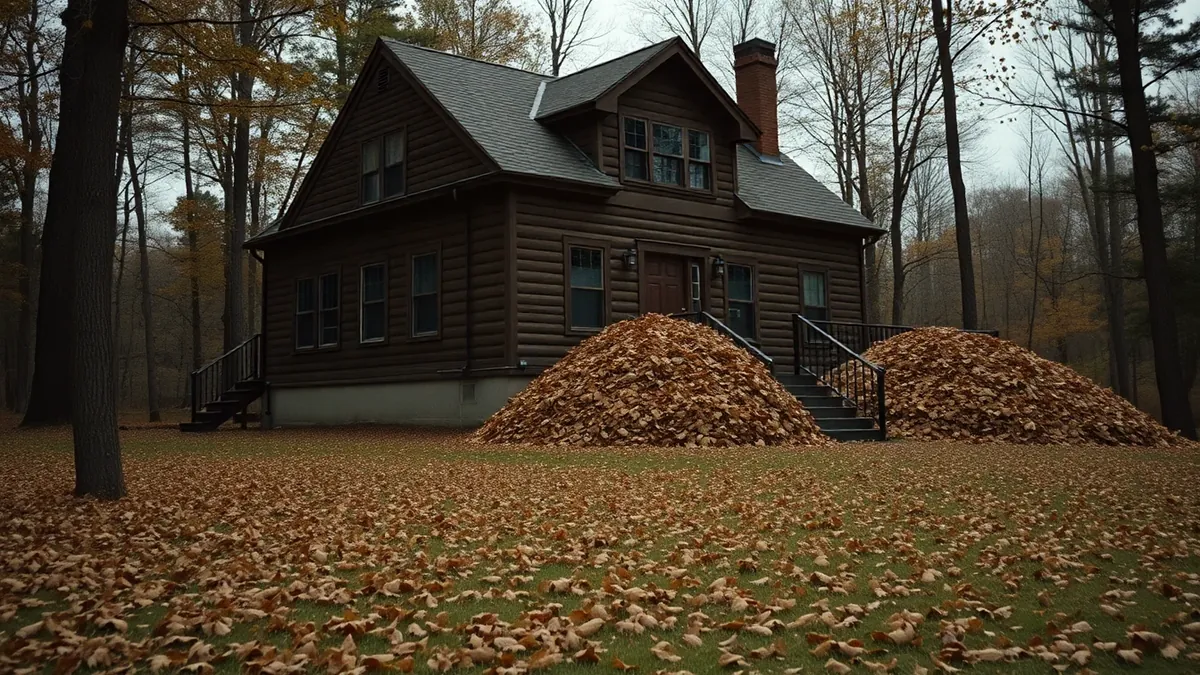
My grandparent's house was a deep brown that always reminded me of the surrounding forest. For the longest time, I thought their house was made of logs, but it was only the color fooling my young mind. They lived in Indiana, and for one reason or another, we were staying with them for Thanksgiving week.
Orange leaves covered the entire lawn and backyard like a festive comforter, and my little sister was piling them higher than she stood. I wanted to play too, but I was bringing in wood with my dad.
This was one of the few chores I was expected to do, and I tried to do it right. I curved my arms to carry three pieces at a time. My dad could get five, sometimes six. He carried some under his strong right arm, and one in his left hand, which would swing back and forth as he walked. Back then, he seemed so much taller than I was, like a mountain. One day, I carried as much wood as he did, and then I knew I would be a man, for whatever that’s worth.
There was not as much wood at my grandparents’ house, so we were done much sooner than usual. Pop Jack didn’t like to buy precut wood. He’d get one of the neighbor boys to cut some for him, and I would always glance at the low stump. I wondered why Pop Jack never asked me to cut wood for him; maybe it was because we didn’t visit often, since Indiana was so far away from California. It was much colder, and the distinct musk of ocean air was replaced with the cold of trees, like the difference between the ocean and stream.
With a long exaggerated sigh, my dad declared the chore complete, and I rushed over to play with my sister. I found her sprawled atop an orange and red bed of leaves, eyes a half closed like she was half asleep. A little disappointed, I picked her up, not like the wood, but like my sister, her arms around my shoulders, and legs through my arms. I carried her around the house and through the back door, resting her on the couch with dark and light greens, like some of the less interesting trees. Half asleep, she tells me she’s sorry, and still wants to play. I tell her it’s okay and to nap. She obliged with little objection, turning to her side, using her pink glove as a pillow.
My dad was inside drinking lemonade, an odd commodity for an Indiana autumn, but it was our family’s drink of choice, no matter the season. I presume he was talking to my mom and Grandma, who were both in the tiny kitchen talking about preparations for Thanksgiving. My mom didn’t really cook, but Grandma loved the company, and liked to show off her years of expertise.
I sat outside, my back to the dark brown, almost black wall of the house.
Now that my sister wasn’t playing outside, the world seemed so quiet.
There was space and a backyard, things I never really saw back in California. Instead of a beach, there were puddles of orange and red lingering on the grass.
From the side of the house, I heard footsteps and the sound of something flickering in a cage, metal shifting and banging. Pop Jack arrived, his body slouched forward, black gloves carrying the cage, his other hand stuffing a pipe in his pocket. He asked if we brought in the wood. He asked, “Do you still want to help?” Before, I had offered to help Pop Jack with anything he needed, especially if it involved the axe—I had an odd fascination with something that could cut wood, cut trees. “Alright,” he said to me, “can you grab the axe from the shed?”
I had been waiting for those words. I ran to it, in the back of the black shed, near the wall of wood pieces I stacked with Dad. I walked over to it slowly, and with a false sense of reverence. It was not a toy, but still the desire to play was immense. The hilt was pointing up, and the blade stood atop the cold cement.
The first thing I noticed when I grabbed it was how heavy it was. It wobbled as I tried to hold it up by the end until it came down with a clang. The weight of it scared me; the sound of it clashing against the floor made me yelp. I ended up dragging it back to Pop Jack, its shrill shriek sending chills into me. He was watching me, judging if I was worthy. Panic stirred, and I picked up the pace. I stopped in front of him, panting, resting the axe on its head so it could stand up by itself.
“Are you sure you want to help?” he asked.
I said I wanted to more than anything else. He smiled in recognition, and went over to the cage. It was a large gray thing, plastic walls hiding whatever was living in it. He opened the wired door, and pulled out a turkey. It was brown, like mom’s pumpkin pies, but its head was fleshier, and the creature, clearly confused, kept squawking for help.
Pop Jack was careful holding it. He tilted the bird until its head and neck were resting against the stump, right underneath one of the scars.
Again, he asked if I could do this. Now I wasn’t sure, but still, I grabbed the axe, and he took that as an affirmation. The axe seemed heavier this time as I tried to pick it up from the end of the hilt. Pop Jack said, “No, that’s not the way; grab it at its base.” Confused, yet obedient, I did as he said, and it seemed heavier than the world in my tiny arms.
After a deep breath, I lifted it up, above the turkey, the blade shaking. Moments passed and Pop Jack told me to hold it tighter, the way I was holding it was dangerous. I couldn’t listen as I locked eyes with its black gaze. It didn’t want to die. My body went limp; my legs refused to stand; my arms refused to hold the axe. With a collapse, the heavy axe struck the trunk, bouncing against the tough wood. I was on my knees, and I could see the blood—it was all I saw; it spurted out of the neck onto the red metal of the axe, blending in perfectly. The axe folded over the head, completely hiding the eyes that once pleaded to me.
Pop Jack struggled with the turkey; it still fought back even after the guillotine dropped. Eventually its heart gave its last pump, and the legs and wings dangled lifelessly above the ground. Pop Jack rested the turkey on its side. He turned and slapped me. The shock left me numb, and I wasn’t sure what happened, but when I did, I could feel tears forming behind my eyes.
He told me never to drop the axe like that again—it was dangerous, and I could have cut him.
He stared at me, old sage eyes reading me like a book until he sighed and put his hand on my head, saying he was sorry. Picking up the turkey, he said I did a good job and I should head back inside. Wordless, I went back into their house, trying my hardest to hide the tears.
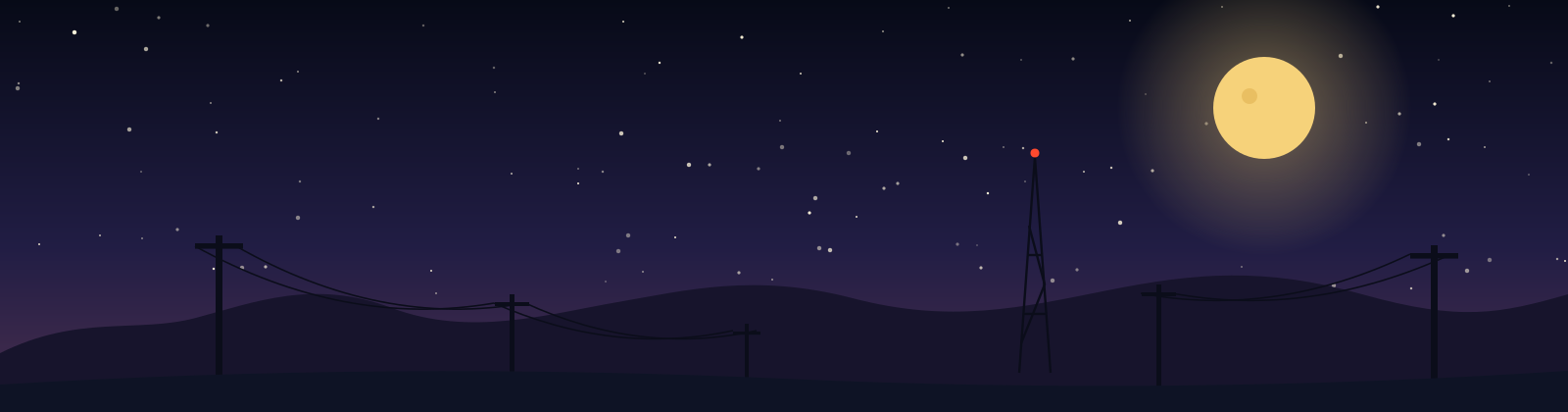
The house was ablaze with conversation; Aunts had come over, and everyone was talking about Thanksgiving, sharing how excited they were. I was the only one not consumed by good spirits. Instead of participating, I was sitting by the house, in the same spot before Pop Jack came back. It was dark, and the sky had already come out. That night I saw more stars than I could imagine. Perhaps it was because we were so close to the woods and away from the city, but the sky seemed so much softer, gentler than the California sky. It was like the world was covered in a giant blanket, each star a thread invisibly connected to one another.
Even in the dark, I could still see the stump, and I felt like it was staring back at me with resentment or disappointment. My dad, with his big, tan coat and white hair, came out of the boisterous house. He looked around for a little bit, until his eyes adjusted to the dark, and like magic he saw me amongst all the black empty space. Putting his hand by his mouth, he called out to me but I ignored him, going back to the comforting sky. He came to sit by my side, leaves and grass carelessly crunching with each of his steps.
“What’cha doing out here champ?” he asked me. Silence was my answer; I didn’t know how to talk anymore, like I dropped the ability to speak with the axe. It didn’t take long for him to figure out what was wrong. Pop Jack told everyone inside how I did a good job, and everyone gasped at the violent act. With help from Grandma, everyone calmed down, and actually started to celebrate the event as if it were a party game.
“Pretty scary,” dad said, “still you were brave.” He put his hand on my head and scuffed up my hair.
“I don’t like it.” I said, breaking my silent oath. “I don’t like the feeling of killing something.”
“It’s not a good feeling and never should be.”
“Did you feel like this during the war?”
He went silent, searching for the right words to say to his son, who had no real idea of anything. “Yeah, it felt pretty bad too.” His voice was low and the grip he had on my head was weak. I never liked asking questions about the war because he seemed sad when answering.
“What are you doing?”
We both looked to the right, my sister in her pink puffy jacket was looking at us, a little confused and betrayed. “I want to look at the stars too!” And like that, she rushed over to my side and sat down with an annoyed thump—she too looked up, her mouth rounded in awe—the three of us staring at the Indiana sky.
“A Memory from Indiana” was printed in Crossroads, No. 8 of Inwood Indiana. Pick up the paperback from Prolific Press; the stories and poems published online are free to read here.
Get the paperback